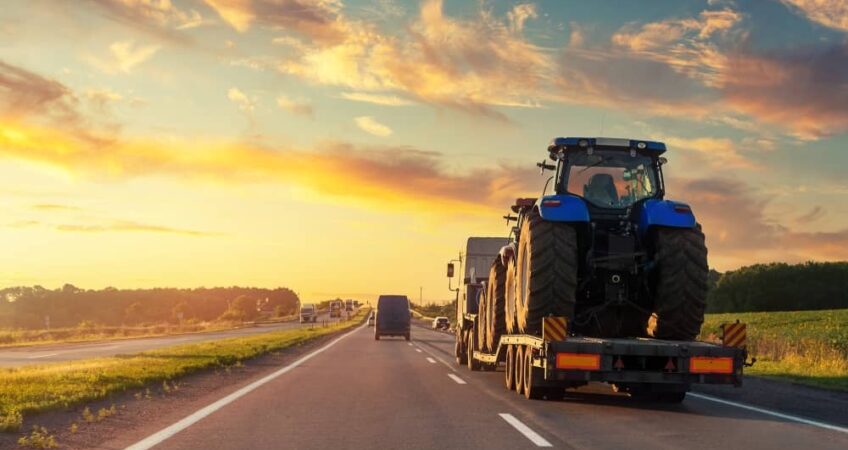
Heavy machinery transport companies are an invaluable resource for the transport and logistics industry. They transport large, bulky items such as locomotives, boilers, transformers, and industrial machinery. Hiring a heavy haulage company protects your freight. These haulage companies use proper equipment and follow safety protocols to transport heavy objects on rough roads or terrain. They have different options for haulage vehicles and equipment which have less risk of damage to your goods. (more…)
Australia is home to some of the world’s most complex and advanced heavy haulage operations. The heavy haulage industry in Australia has grown due to the increasing size of cargo and vehicles and the changing nature of infrastructure.
Fatigue management is requisite for truck drivers to observe road safety and compliance during freight transport. Proper fatigue management counters dangerous driving outcomes, such as falling asleep at the wheel or making wrong turns. Knowing the causes of fatigue and its associated risk bolsters the need to take preventive measures.
Fatigue results from lack of rest or working long shifts. It leads to failed physical performance, impaired cognitive abilities, and poor judgment. Truck drivers need to consider strategies that manage their workload to mitigate fatigued driving. It involves taking regular breaks during a shift and avoiding activity that makes concentrating difficult. They should also eat healthy meals and get enough sleep before and after each shift.
Signs of Fatigue
Decreased alertness and reaction time
Difficulty concentrating
Daydreaming or zoning out
Irritability and mood swings
Continuous Yawning
Swerving or jerking the wheel
Erratic braking or acceleration
Difficulty staying awake
Loss of appetite
Blurred vision
Effects of Fatigue
Increased risk of accidents
Reduced coordination and motor control
Increased stress levels
Lower concentration levels
Poor judgment
Impaired vision
Loss of motivation
Inability to focus
Lower productivity
Increased risk of health problems
What Causes Fatigue?
Without proper rest stops, drivers lose energy and have decreased alertness and reaction times, increasing the likelihood of an accident. Furthermore, the weight of commercial trucks also slows acceleration times, increasing the time it takes drivers to reach their destinations and contributing to fatigue. Drivers must stay vigilant when on the road and remember to take breaks when necessary for their safety and for other motorists.
Long-haul truck drivers often experience fatigue due to the stress and monotony of their work. Constant driving for hours on end, often overnight or under challenging conditions, limits sleep time and disrupts one’s natural circadian rhythms. Sitting for prolonged periods also leads to health issues like obesity and heart disease, which make you tire fast.
Truckers must also contend with sedating medications while on the job. They also deal with stressful factors like the strain of logistic planning and tight scheduling deadlines. Truckers navigate unfamiliar roads and drive in challenging weather conditions, which stretch anticipation and energy levels over time.
Other causes of fatigue include:
Ignoring federal driving regulations
Unhealthy or low-quality food choices
Dehydration
Mental and physical exhaustion
Inadequate rest breaks
Rules and Regulations You Need to Know About Fatigue
Western Australia has the Heavy Vehicle Driver Fatigue Regulations 2011 and the Western Australian Road Transport (Vehicle Standards) Rules 1998. The former sets rules for managing driver fatigue, while the latter outlines what drivers expect of their work hours and rest breaks.
The Heavy Vehicle National Laws outline rules to manage fatigue and risks to road safety. This law requires a driver not to drive more than 12 hours in any 24 hours and to take regular rest breaks.
The Chain of Responsibility laws requires all parties involved in goods transport to ensure drivers are not fatigued while on the road. They must ensure every driver is well-rested before getting behind the wheel.
For Solo Drivers
Drivers must take at least 20 minutes of break time after every 5 hours of work. This break must include at least ten consecutive minutes of rest, taken during or after the 5-hour shift.
Drivers must work at most 168 hours over a 14-day period.
Drivers must have 27 hours of non-work time every 72 hours. It includes three periods of at least seven consecutive hours of non-work time.
Drivers must have at most 17 hours between non-work periods. These periods must be at least seven continuous hours.
Two-up Driving
Drivers must take a break of at least 20 minutes after every 5 hours of work time. Breaks should consist of 10 consecutive minutes or more, which they can take during or after five hours.
Drivers should work up to 168 hours in any 14 days.
Non-work time must be at least 7 hours in any 24 hours spent in transit or stationary.
Drivers must have at least 24 hours of non-work time between shift changes if they are working five or more consecutive days.
Steps to Take if You are Fatigued
Drivers should take precautions and be aware of warning signs if they spend long hours behind the wheel. These are a few steps truck drivers can take to combat fatigue and stay safe:
Find a safe, quiet truck bay away from traffic to rest.
Use dark curtains and liners to keep out light. Blocking out exterior lights to reduce distractions is effective in combating fatigue.
Turn off your phone or radio for minimal distractions and ensure your sleeping berth is well-ventilated.
Depending on your schedule, nap for 20-30 minutes or longer.
Drink plenty of water.
Eat healthy snacks: Healthy, nutrient-dense snacks provide sustained energy and improve concentration. Drivers should choose snacks that are low in sugar, high in protein, and free of processed ingredients.
Fatigue Management Strategies
Fatigue management recognises and responds to the adverse effects of working long hours beyond natural body rhythms. It requires various strategies to ensure drivers’ safety, health, and performance while encouraging them to maintain a balanced lifestyle. It also encourages the establishment of realistic working or break cycles and provides regular breaks throughout the day. These breaks range from shorter rest periods between tasks to longer hours of restorative sleep at night. It prevents potential fatigue-related injuries or illnesses associated with lack of sleep.
As a truck driver, feeling tired and exhausted is natural. To ensure you remain safe while driving, understand the dangers of fatigue and follow specific fatigue management strategies. These strategies help you balance rest and work, safeguarding your well-being.
Get Adequate Rest: Truck drivers should get at least seven hours of quality sleep each night and take regular breaks while on the road. Follow the workplace procedure and protocols as outlined.
Eat Healthy Meals: Eating healthy meals with energy-boosting nutrients maintains energy levels.
Exercise: Light physical activity helps truck drivers get their blood flowing and stay alert. Simple activities like stretching or taking a short walk make a big difference in how awake and energised they feel.
Follow the Fatigue Management Rules and Regulations: They uphold scheduling, rostering, workplace conditions, health and well-being, and training and education. Take the necessary fatigue management training and standards.
Importance of Fatigue Management Training and Standards
Fatigue management is a critical part of any organisation’s safety regulations, as it affects the well-being of employees and the quality of their work. Investing in fatigue management training and standards ensures workers know how long they can work without losing concentration, which can lead to errors and accidents. Fatigue management training and standards protect truck drivers and the public. Without proper training, drivers may be more susceptible to falling victim to the dangerous effects of fatigue.
Companies should ensure their drivers receive proper education and information on fatigue management. They should provide comprehensive training before a driver hits the road. They should revise how rest/sleep works and how driving long distances affects mental clarity and performance.
Companies should also regularly assess driving schedules and discuss at all levels to identify potential safety issues. Companies can better support their drivers’ safety by staying up-to-date with the regulations of driving hours and rest periods. An effective fatigue management plan should also include establishing specific regulations, such as the maximum hours allowed per shift and days off for recovery.
Key Takeaways
Truck drivers must have proper fatigue management strategies to ensure safe and efficient freight transport. Truckers should plan and create a schedule that includes regular rest stops to remain alert while driving. They should also avoid using medication or substances that could impair their ability to operate a vehicle safely. Additionally, having a proper diet and staying hydrated helps truckers stay alert while on the road.
Australia Wide Haulage is committed to ensuring their freight transport is safe and efficient, and our team members are well-trained in fatigue management. Contact us if you’re looking for a reliable and efficient hauling service with proper practices in place, or if you’d like to know more about fatigue management.
At Australia Wide Haulage, we understand the much care and attention transporting large and delicate items requires. Our team takes great precautions to ensure your heavy equipment and machinery arrive at their new destination in one piece, but what else do you need to consider?
In this blog post, we cover everything you need to know about heavy equipment & machinery transport to know how to prepare, what it entails and how to make the process go over smoothly.
Heavy machinery that hauling companies transport includes:
Earthmoving
Mining
Farming
Construction
Industrial equipment
Using our extensive fleet, we deliver your load wherever you need it.
Earthmoving Machinery
These are heavy machinery used to move materials and objects around a construction site. They dig, excavate, fill, grade, and move soil in land development and large-scale construction projects. Earthmoving machinery includes bulldozers, backhoes, scrapers, and graders.
Bulldozers are heavy-duty machines moving earth and materials around a construction site. They feature large, wide treads on their tracks, allowing them to move with ease. Bulldozers have different attachments for special applications such as land clearing and grading. They are also used for digging, moving soil and rocks, hauling materials, and compacting the earth.
Backhoe Loaders are versatile machinery used for digging, excavating, material handling, and hauling. They have a front-mounted bucket and a rear-mounted backhoe attachment, ideal for digging deep trenches or holes. The loader also has hydraulic arms that move and lift heavy materials.
Farming Machinery
Farming Machinery is used for agricultural operations like tilling, harvesting, planting, and fertilizing. Farming machinery includes tractors, combine harvesters, balers, mowers, and planters.
Tractors are the most versatile farming machinery. They are indispensable tools for agricultural operations. Tractors plough fields, cultivate the soil, haul materials, and transport goods. You can also fit tractors with different attachments, such as front-end loaders and backhoes. These extensions expand their abilities for different applications.
Combine harvesters are large and powerful machines used in the farming and agricultural industry. They cut, thresh, and clean grain crops such as wheat, corn, oats, barley, soybeans, and alfalfa. Combines have a rotating header that cuts the crop while the reel helps align it and feed it into the threshing cylinder. Australia Wide Haulage provides transportation for these large farm equipment to and from a job site as required.
Mining Equipment
Mining Equipment is essential for extracting minerals and resources from the earth. This heavy machinery includes drillers, crushers, loaders, excavators, and dump trucks. With their powerful engines and large size, these pieces of equipment dig deep into the earth to extract mineral resources.
Heavy machinery transport requires extensive preparations. It guarantees the bulky and delicate cargo’s safe and efficient movement. Before transportation begins, hauling company professionals thoroughly assess the machinery. They ensure it is in proper working condition. They also ensure it is well packaged for transport. These are steps that a competent company like Australia Wide Haulage follows to transport heavy machinery.
Full Risk Assessment
The hauling company must conduct a full risk assessment to transport heavy machinery. They must identify any potential risks associated with the transport process. They minimize risks to ensure a safe and successful operation. Such risks include potential damage to property, personnel, or the environment. These risks could be due to sudden changes in terrain or weather conditions that could lead to an accident.
Confirm the hauling team has protective clothing, equipment, and specialized vehicle configurations. Check the type of machinery being transported. Examine how large, heavy, or fragile the machine is and how much protection it requires against the elements. This information determines the best route and mode of transport. It also determines the requisite protective measures during transportation.
Use the Right Tools
Determine what types of vehicles, tools, and machinery should move the equipment. For example, larger or heavier machines require a crane for lifting and loading onto trailers. Smaller or lighter items can use dollies and manual transport equipment. Have specialized tools on hand designed to haul heavy machinery. They include straps, winches, chains, and lifting equipment that secure the load for transport. Use the machinery’s right type of connectors and fittings to fasten it during transport.
How to Prepare for Heavy Machinery Transport
Transporting heavy machinery is a complex process requiring careful planning and preparation. Consider the machinery’s weight, size, and destination dictate what type of transport vehicle. Lubricate all moving parts, and confirm that safety precautions are in place. Confirm the machinery is secured to the transport vehicle.
Obtain the needed permits depending on where you are located. You may need a special permit to move heavy machinery over state or county lines. You also must ensure the roads you plan to take are properly cleared for such a large vehicle. Have a backup plan in case of a breakdown or unexpected events. Prepare to make emergency repairs along the way, and always carry extra fuel, fluids, and spare parts.
Tips for Moving Heavy Equipment and Machinery
1. Prepare the Equipment
Ensure the equipment is securely fastened and ready for transport. Remove any loose parts because they may be damaged or cause obstruction. If possible, don’t take any unneeded attachments or components.
2. Use Proper Lifting Techniques
When lifting heavy machinery, use proper body mechanics to ensure safety and prevent injuries. To lift the machines without harm, use a crane if available. The crane should be well-maintained and meet safety regulations.
3. Choose the Right Transportation Method
Heavy equipment and machinery can be transported using a flatbed, an enclosed trailer, or hiring a specialized mover. Always transport heavy machinery using the necessary tools and vehicles to avoid damaging it and for safety reasons.
4. Secure the Load
When transporting heavy machinery, ensure it is firmly fastened and won’t move during transport. Use straps or chains to tie down the equipment, and ensure the straps are well secured.
5. Inspect Your Path Before Proceeding
Double-check your path before moving heavy equipment, as it is harder to stop mid-movement. Measure any turns or dips to ensure your machinery fits through them. Consider obstacles like power lines, trees, and structures along your path. Make arrangements with local authorities to have any obstructions removed where applicable.
Contact AWH to Move Your Heavy Machinery
Australia Wide Haulage is a perfect choice for heavy machinery or haulage transport. We provide clients with the best quality service in the industry, and specialize in delivering heavy machinery safely to your location, regardless of size or weight. Contact us today for more information or to get started on your next project!
Logistics costs are one of the major expenses for a business, but you don’t have to accept them as unavoidable. Reduce logistic costs and maximise efficiency to keep your business running effectively and profitably.
Businesses face unending pressures from different directions, including rising fuel and equipment costs. It is crucial to monitor your business operations and actively seek new ways of reducing logistic costs. At Australia Wide Haulage, we commit to ensuring your logistic costs reduce significantly by employing various strategies.
1. Embrace Automation and AI Technology in Your Logistics
Automation is one of the most cost-effective ways to streamline logistics operations. Automating order fulfilment, warehouse management, inventory tracking, and delivery schedules reduces labour costs. Artificial intelligence (AI) and machine learning (ML) technology can optimise your logistics operations.
Companies can use AI algorithms to analyse large amounts of data to identify hidden trends and patterns. With this data-driven approach, companies can make more informed decisions about their operations, such as optimising inventory levels and adjusting delivery routes. Use AI systems to schedule deliveries efficiently and accurately without overspending on logistics.
Another way businesses use AI in the logistics sector is through automated robots for transportation and storage. Program robotic systems to move goods in the physical movement process and control stock levels. This reduces the need for manual labour and allows companies to reduce costs while increasing efficiency.
2. Rely on Different Transportation Methods
Cut logistic costs by utilising different modes of transport for your business. For example, using road freight may be more cost-effective than air freight for some businesses. If you’re shipping items that are not time-sensitive, then road transport can save huge costs. Additionally, opting for sea freight for bulky or oversized items can be a great way to reduce costs, as sea freight is often heavily discounted.
Your business should adopt transport mode flexibility and avoid using costlier shipping options. Expedite shipment for goods that your customer needs sooner instead of the entire shipment. Use other less expensive modes of transport to ship the remaining part of the consignment. Rail transport is less costly than trucking, and combining both could favour your business. Consider intermodal transportation instead of relying on a single mode of transport.
3. Consider Shipping Consolidation Options
Shipping consolidation combines multiple orders into one shipment, allowing companies to reduce costs. Conduct shipping consolidation through a third-party vendor or work directly with suppliers. Consolidating shipments reduces postage fees, inventory costs, and fuel surcharges. It also eliminates the need for multiple packaging and handling, reducing waste costs. Furthermore, consolidation helps to ensure that the goods arrive on time and in good condition.
The key to success with shipping consolidation has a well-structured plan. Start by assessing your current supply chain system and determining what drives your costs and how you could optimise them. Identify areas where multiple orders can be consolidated into one shipment and investigate the benefits of doing so.
4. Centralising Procurement
Centralising procurement is essential for any business looking to reduce its logistic costs. Businesses gain a better understanding of their supply chain and allocate resources efficiently. Do this through centralising orders from multiple vendors into one location, streamlining the ordering process, and negotiating better prices for bulk orders. Businesses can also benefit from a more efficient and streamlined distribution system by consolidating deliveries from multiple vendors into one shipment. This will reduce the number of trips taken throughout the supply chain and help to reduce the overall costs associated with it. By centralising procurement, businesses can take advantage of economies of scale and drive down their logistic costs.
5. Improve the Visibility of Your Supply Chain
Improving supply chain visibility is key to reducing logistic costs for your business. It means getting a closer look at the inventory and other areas, such as risk management, customer service, and finance. By increasing visibility into the supply chain, organisations will be better positioned to anticipate and respond to changing market dynamics faster. Supply chain visibility helps organisations to strengthen collaboration, reducing costs and ensuring supplier performance is consistently monitored. This aids in keeping an eye on potential disruptions to operations due to these parties far earlier than before. Ultimately, supply chain visibility offers forward-looking benefits to organisations looking to enhance end-to-end process performance while fixing problems that may have otherwise gone unnoticed.
Factors Affecting Logistic Costs
Logistic costs are some of the most important components that affect a business’s bottom line. Logistics costs vary drastically depending on the type of goods being moved, the mode of transportation and any associated services. Logistics cost is affected by both external and internal factors.
External Factors
External factors that affect logistics costs include fuel prices, labour costs, taxes, tariffs, and other surcharges. The fuel cost is the most volatile of all external factors since it is subject to wide fluctuations depending on supply and demand. Costs associated with labour also vary depending on the duration, location, and type of job required. Taxes, tariffs and other surcharges can also lead to increased logistic costs.
Deregulation
Deregulation is when the government reduces or removes restrictions and regulations on businesses and industries. This significantly affects logistics costs. It lowers business costs by removing red tape and eliminating unnecessary bureaucracy.
Consumer Behaviour
Consumer behaviour is a key factor that affects logistics costs as it drives the demand for goods and services. An increase in consumer demand for a particular product can increase the cost of shipping and handling goods associated with that product. This can lead to increased costs for the business due to increased transportation, packaging, and handling associated with order fulfilment.
Growing Power of Retailers
The growing power of retailers is driving up the costs of logistics services. Companies are demanding more efficient delivery times and cost-effective solutions. This has led to an increased focus on supplier selection and negotiation, automated systems for inventory control, improved customer service protocols and a greater emphasis on efficiency and productivity. As retailers increasingly turn to third-party logistics services to reduce their overall operational costs, they are also looking to reduce their supply chain’s direct and indirect costs. They are looking closely at selecting better logistics service providers or negotiating more favourable deals with existing providers.
Internal Factors
Internal factors that affect logistics costs include company size, the type of goods being shipped and the scope of services required for delivery. Larger companies have a greater ability to negotiate lower rates with carriers due to their larger volumes of shipments. The type of goods shipped can also affect when dealing with perishables or hazardous substances, as additional fees or restrictions may apply. The scope of services required for delivery also affects logistics costs, as more complex tasks require additional personnel or specialised equipment, which add to the overall cost.
Type of Goods
Large and bulky items like heavy machinery may require special handling procedures, which can significantly increase costs compared to smaller items. Hazardous materials must be shipped in compliance with strict government regulations, resulting in increased safety protocols and higher costs. Food products often require special temperature controls to maintain quality and safety during transport, adding additional cost to the logistics process.
Contact Us at Australia Wide Haulage
Logistics costs can be a major expense for any business, particularly those with significant supply chain operations. Reducing these costs can often be the difference between success and failure. Australia Wide Haulage is here to help you reduce logistics costs and maximise the efficiency of your business. Our experienced team of logistics professionals can provide you with the best possible solutions to reduce your logistic costs.
We pride ourselves on our customer service and will always strive to provide you with the most cost-effective solutions for your business. If you would like to learn more about our services or have any questions regarding logistics, please do not hesitate to contact us.
The right logistics partner can be a business’ powerful ally in becoming more profitable and achieving success. This statement is especially true in mining, where, just like any industry, there is a constant search for inexpensive and efficient mining methods.
Transporting oversized loads is a complex task. There are requirements and arrangements to complete before you’re permitted to take to the road. As a logistics company, we know about rules and regulations that should be followed, especially in transporting the over-dimensional load from one point to another.
When we talk about oversized loads, it’s not just about metal sheets on the roof rack. Defining oversized loads and determining what counts as one is the first step towards understanding the best and most lawful way of handling them. Oversized loads are those exceeding restrictions regarding weight, height, and width deemed safe for roads and freeways. Anything oversized can no longer be dismantled or delivered in smaller and lighter pieces, resulting in an extremely large load.
Motor vehicles should not exceed 2.5m wide when driving on a freeway
If within a central zone, motor vehicles are allowed up to 5.5m wide and 30m long
12.5m long, 14.5m long limits for controlled access buses, and 18m long for articulated buses
Semi-trailer distance from the articulation point to the rear overhang line should not exceed 9.5m
Rigid vehicles allowed dimensions: 12.5m x 5.5m x 5.5m (LxWxH)
Prime mover towing a semi-trailer allowed dimensions: 40m x 5.5m x 5.5m (LxWxH)
Massive equipment and infrastructure used for mining, earthmoving, and civil construction often count as oversized loads. The same goes for boats, bridge components, agricultural machines, harvesters, drilling rigs, pump trucks, mobile cranes, tractors, and turbine blades. They are categorised under oversize and/or over mass (OSOM) vehicles legislation, which typically requires permits. If you are moving large plant, construction machinery or mining equipment, our heavy machinery transport team can help match the load to the right trailer setup, route and timing requirements.
All states and territories generally have their own rules when driving or transporting massive loads that are wider, longer, and heavier than standard vehicles and are called Restricted Access Vehicles (RAV). These loads are subject to specific regulations to make sure everyone on the road is safe and will gain fair access, especially when traversing national roads. Dimension limits are imposed on oversized loads, as well as other requirements, including:
Night travel restrictions
Warning lights installed on the front, back, and sides of the vehicle
Minimum following distances (at least 200m from other heavy vehicles in front in WA)
Mass limits based on the vehicle’s axle group
Full route map of the destination
Strict speed limit adherence (80km/h in WA)
Load restraint compliance
In some regions, a police escort is required. In WA, a Traffic Escort Warden (TEW) is required for all loads exceeding 5.5m wide or 40m long. Service fees range from $1,040 to $2,600 per day. If the law compels you to have a pilot vehicle, be sure the driver holds a Heavy Vehicle Pilot Licence, except if he/she has acquired Heavy Vehicle Agricultural Pilot Authorisation.
Additionally, the driver of the Restricted Access Vehicle must always comply with signals and directions provided by the lead pilot. Escort or pilot vehicles are not allowed to carry a load or tow a trailer. They can carry tools, substances, and equipment that may be useful for transport. They should also have a warning sign, such as “Oversize Load Ahead,” along with two Wig Wag Lights or alternating flashing white lights on the front.
To be exempted from a pilot or escort vehicle, the RAV should not exceed 26m long and 2.5m wide. Prime movers and low loader trailers with no dollies do not require a pilot vehicle provided that they are at most 26m in length and 3.5m in width. If you are unsure whether your load needs a pilot or escort vehicle, our guide to heavy haulage escort vehicles explains when escort support may be required and how it helps keep oversized transport controlled on the road.
Required Permits for Delivering Oversized Loads
A permit is needed to drive a Restricted Access Vehicle on a public road. All vehicles and vehicle combinations that exceed the following cannot operate without a permit:
2.5m wide and 4.3m high
12.5 long for rigid vehicles and 19m long for combination vehicles
The gross mass of 42.5 tonnes
6 tonnes on a single steer axle
10 tonnes on twin steer axle groups with non-load-sharing suspension and 11 tonnes for load-sharing suspension
20 tonnes on tri and quad axle groups
Before getting a permit to transport oversized loads, make sure the vehicle is licenced by the Department of Transport. The process involves inspection of the vehicle, submission of Form VL17, along with identity and vehicle ownership documents, and paying vehicle registration fees.
After getting your vehicle licenced, you are also required to register as a RAV operator. The document to fill out can be found here. The next step is to be accredited under the WA Heavy Vehicle Accreditation (WAHVA), which is mandatory if you’re required to have a permit. It is required whether you’re operating within WA or other states.
Permits for Class 1 RAV cost $25 for a single trip consisting of a large indivisible load. Meanwhile, if you’re carrying over mass loads, your permit will cost 1 cent per kilometre for every tonne that exceeds the accepted statutory mass defined under the Class 1 Oversize Period Permit. If your load is time-sensitive, it is worth speaking with a transport team early so route checks, access conditions and permit timing can be reviewed before the move is booked.
Vehicle and Fleet Standards
Different types of permits are required depending on the vehicle being operated. Oversize/over mass (OSOM) permits are stated above, but they can be obtained for longer periods. Suppose you regularly transport large loads, including a boat that’s over 2.5m wide. In that case, you can gain access across WA (except freeways) with a $50 permit, valid for three years.
Meanwhile, a low loader over mass with a gross mass of 92.5 tonnes can obtain a permit valid for 12 to 36 months. Fees start at $432 up to $2,880, depending on the type of low-loader vehicle you have.
Aside from OSOM permits, you may also want to be aware of the following:
Accredited Mass Management Scheme (AMMS): You should first be a registered operator to get this permit. The updated AMMS was introduced on 22 March 2021, providing conditions for more clarity and flexibility on operator requirements. One of the changes focuses on the absence of a need to identify a specific category of the vehicle on the permit. It, therefore, simplifies the process since the operator will only have to pay for the maximum modified mass required or the mass over statutory limits. That means you can use any approved combination of vehicles as long as they are within the modified mass limit prescribed in the AMMS operating conditions.
Agricultural Vehicles: All agricultural vehicles exceeding the defined dimensions and conditions specified above are covered by Agricultural Combinations/Machines Order 2022. These two types of Agricultural Orders allow eligible vehicles and machines to operate anywhere within WA except freeways without needing any permit. Machines can be operated on a road outside Perth’s metropolitan area even with no permit, as per Agricultural Machine Order 2022. However, any over-mass agricultural machine under the Order will not be allowed to cross all the bridges listed in this document.
Special Purpose Vehicles: Vehicles that are not classified as tow trucks or agricultural vehicles and used for any purpose aside from carrying a load are under Special Purpose Vehicles. Examples are concrete pumps and fire trucks. Although they carry water, they have specific purposes.
Approved RAVs can carry other items apart from the sizeable indivisible load if they comply with the Guidelines for Transporting Multiple Items on an Oversize or Overmass Vehicle. For example, if it is a multimodal container, the vehicle should not be wider than 2.5m or higher than 12.2m. The height from the top of the container should not be over 4.6m.
RAVs are not allowed to travel at night unless they have obtained a permit to do so. Typically, any RAV with a length of up to 22m and a width of 2.7m can traverse any road. Rigid vehicles, on the other hand, can only operate on roads outside the Metropolitan Area. Any RAV that is 26m long and 3.5m wide are permitted to cross the freeways provided the journey is between 9:30 PM and 5:00 AM.
What About Other States?
The abovementioned permits and requirements apply to Western Australia only. Other states may have varying conditions. For example, Victoria allows loads up to 4.9m high, 5m wide, and 26m long without a permit to cross railways. Tramways require vehicles not exceeding 4.3m in height, 3m in width, and 26m in length.
Access permits for OSOM in New South Wales apply to vehicles under Class 1 Notice or Ministerial Order. Some examples include agricultural machines like grain augers, harvesters, and vehicle combinations used in mining and construction.
Queensland requires all vehicles and combinations to obtain a permit if they exceed 4.5m to 5.5m wide. The permit will allow them to travel on roads in critical areas but should have at least one police escort, along with two escort vehicles. The operator must agree to have at least three escort vehicles travel on main roads.
Let Us Help You
There is no one-size-fits-all permit for oversized load transport. If you already know your load dimensions, route and preferred timing, send those details through so our team can review the job more accurately. Most permits are difficult to obtain and can take a long time to get approval, which can be a great hassle to haul oversized items within a strict time frame. That’s why we’re here to make things easier for you. At Australia Wide Haulage, we keep up-to-date and compliant with regulations and permits for over-dimensional loads. Partner with us to ensure that your goods are delivered safely and on time anywhere in WA or other states.
If your business requires transportation services, it’s only right that you pick a transport company you can trust. Whether you need assistance occasionally or on a more frequent schedule, you demand that your goods are delivered promptly and safely at the correct location.
Reducing transportation costs helps maintain a healthy bottom line. That’s why your business relies on a good transport company to move your product from one point to another. Before you pay for the service, you need to ensure you’re dealing with a reliable firm that will assist in easing your daily operations.
Are you planning to hire a transport company? Then, this blog is for you. Here are five things to look for when choosing a freight business:
Efficiency
One of the first things you must do is to talk to customer support or a company representative. It will help you gauge the company’s efficiency in transporting goods. Ask about their capabilities, how they book and report the movements of their vehicles, and how they manage their inventory. Enquire a lot, including about GPS tracking, safety, and locations covered.
Don’t forget to ask about the types of shipments that they allow. Some companies only ship one or two types of items, which may not include the goods you commonly transport. If you have various products that may need delivery services, opt for a company that can accommodate changes and manage multiple shipment types. Optimised routes and fuel stops will also aid in reaching the intended destination on time.
Part of ensuring a company’s efficiency is the proper maintenance of the vehicles, especially for heavy haulage. Tyre pressure, fuel consumption, and axle alignment are just some areas that any reputable business should look into regularly.
A reputable company will give you clear answers so you get peace of mind knowing they can overcome any difficulties that may occur on the road.
Communication
Transparency is vital in any business, including transporting goods. Do you have any questions regarding the service? What if you want to track your shipment whilst it is on the road? An efficient and honest business will give you the details you require. More importantly, if there are possible delays or other issues with the transport, you should immediately be notified.
When transporting your consignment, you most likely need real-time information, such as the live location of the truck and its route data. Any experienced transport business will already be equipped with the latest technology, including satellite or GPS tracking. That way, customers like you can get the shipment details with just one phone call or a few clicks on your computer or smartphone.
Safety Monitoring
A reliable transport company prioritises logistics safety as it has a direct impact on the brand’s competitiveness. The last thing you want is to worry about product theft or damage (or both) whilst your goods are being transported. That’s why safety monitoring access is essential.
As the customer, you should rest assured that your products will be delivered on time and in one piece. Mishandling, accidents, or storage issues during transport can represent substantial financial losses to your business. Not only that, you will have to deal with manufacturing or commercial operation delays, which can significantly affect your business’ reputation.
Therefore, you should look for a transport company that can ensure the safety, efficiency, and fulfilment of deliveries. Proper measures, such as the ones below, are set in place to spot and mitigate risks, threats, and challenges to certifying the correct handling and protection of goods:
Using robust storage, along with advanced logistics systems for locating cargo in real time
Guaranteeing cargo integrity with locks and seals
Inspecting freight trucks and containers before and after delivery
Checking warehouse and transport staff by implementing employee identification systems to restrict cargo access to authorised personnel only
Using technology to standardise logistics management for recording and supervising product storage, transportation, and handling
Reliable cargo transport businesses are not afraid to use technology to support their processes and services. And when they say your goods will be there, you can be confident that they will arrive.
Trust, Commitment, and Customer Service
With trained staff members and safety policies in place, you can be sure that products in transport are in good hands at all times. Customer commitment is demonstrated by providing outstanding services. Processes are streamlined to alleviate stress, quicken deliveries, and ensure excellent goods condition.
With years of experience, you will get specialised transport services from a knowledgeable team that can solve transport and logistics problems. But this is only possible if you hire a qualified transport company that you can trust.
Organising and implementing the movement of goods can be complicated. The process can involve different parties, such as the consignor and consignee, carrier, and freight forwarder. Everyone should communicate and exchange information whilst ensuring the fulfilment of contractual obligations. On top of that, they should also comply with procedures, legalities, and documentary requisites from various authorities like transport agencies. Only a qualified and experienced transport company can satisfy these requirements.
Shipping or Transport Requirements
If you run a business, you understand how important it is to meet the requirements of your customers. The same principle applies to transport companies. Since customer satisfaction is of great importance, you should look for a transport company that’s willing to go above and beyond to provide the service you need.
One significant factor in finding a suitable freight business to hire lies in the goods you intend to transport. Your requirements will determine the mode of transport or shipping to be used. For instance, you will need a specific service for moving vehicles to a mine or remote site, which you may not use if you only require interstate transport.
Regardless of your transport requirements, the company should analyse the shipment in terms of the following:
The required delivery times
Service and availability
Dependability levels (For example: Will the goods require extra care and handling?)
Transport service costs
Damage possibility
Some goods can be shipped without extra packaging and can be sent out in bulk. Others, however, require extensive packaging for their safety. Many of them end up becoming heavily oversized than the actual products themselves. Meanwhile, some customers need heavy vehicles or machinery moved to another state.
And aside from the packaging, load management should also be enhanced. Trucks generally should be close to full payload whenever possible to maximise each trip. That’s why fleets often use sophisticated software for maximised vehicle capacity utilisation in pickup/delivery routes. No matter the requirement, the transport company should be able to accommodate the service needed.
Hiring a Good Transport Company
Moving goods seems like a straightforward procedure, but so many things are happening behind the scenes that most people are not aware of. Failure to deliver products on time can lead to disappointed customers, which can greatly affect your business. That’s why we highly recommend that you plan ahead of time, especially for oversized transport, to avoid particular challenges.
Hiring the right transport company will help you safely get your goods on the dot and without a hitch. At Australia Wide Haulage, we ensure you that everything will be taken care of in the delivery of the consignment. Contact us for your transport needs, including mine/remote transport and heavy haulage requirements.
Do you need to move large, oversized equipment and other goods?
The trick to making oversized haulage less stressful is to find the right service provider, one who will expertly attend to your every need. Being attended to by an oversized hauling service provider who’s been in operation for several years ensures your cargo is in the right hands.
Carrying oversized loads is not possible with your own car, and typically even a truck will not be the right fit for the job. It’s true when you need to transport heavy hauls, especially from one state to another. The process is also more complicated than you think. Apart from the vehicle, you should also be knowledgeable in securing the load while understanding the rules of the road.
In this blog post, we talk about the process of moving oversized hauls, as well as the things to look for in an oversize transport service.
Factors to Consider When Transporting Oversized Hauls
Transporting oversized hauls is complex. You need a company or a team of people with the knowledge and experience in moving heavy loads. The process is not just about placing the load in the vehicle and securing it. It’s also important to take note of the dimensions so that you don’t get stopped by the authorities. So, when it comes to transporting oversized goods, a reputable transport service provider will make sure the following are covered:
Legalities on Truck Size Limits: You can’t just pick any vehicle you want when moving oversized loads, especially with interstate transports. It’s essential to know the legal size limits, which differ widely in specific locations. But in general, the height limit is 4.3 metres, and the width limit is 2.5 metres for all heavy vehicles. There are a few exceptions based on the type of vehicle and the load carried. An experienced transport company already knows these rules and conditions – or they will do thorough research as part of creating a plan for the service, at the very least.
Weight Restrictions: Weight is also a massive concern in moving heavy hauls. Some loads require a specific set of axles. The tricky thing is that there are roads where the number of axles is restricted to a specific range.
Vehicles Involved: The truck that carries the load is usually not the only thing that’s part of the fleet. Depending on the large haul, you may require a police escort or a pilot vehicle. The rules vary based on the size of the load, the time of transport, and the vehicle used for transporting.
Signs to Bear: In most cases, it’s required for the truck to have several safety signs. Installation of flashing lights may also be needed, which ensures that the vehicle will be seen on the road, no matter what the weather and light condition.
Researching the factors above can take a lot of your time. To save time, you can hire a specialist business that will handle oversized haul transport for you. The company can contact the transport departments of your state and the destination. That way, all rules are adhered to, and your goods will get to the intended location without any problems.
How to Move Oversized Truck Loads in Australia
Before moving oversized loads from and to anywhere in Australia, there are prerequisites that must be fulfilled:
Correct weight and size of vehicles
Escort (if required)
Permits
Knowledge of road restrictions
One benefit of working with a heavy haulage business is that you don’t have to worry about getting the permits. The company will obtain all of them for you.
Meanwhile, as the customer, you may want to be open to a flexible driving period since some oversized loads are not allowed during specific times of the day. The route should be planned accordingly, as well since certain roads and city centres may not allow the load. Depending on the goods in the truck, it may be necessary to liaise with police and councils. Allowing flexibility in the schedule can be beneficial, especially if the destination is far from the origin. Fuel stops, traffic, and other events could impact the plan. Having these things in mind can help in managing your expectations.
After all the prerequisites are taken care of, it’s time to move on to the process of transporting the load. Safety, of course, is a significant concern. Everyone, including the team of people behind the transport to the pedestrians on the road, should be safe as the vehicle passes by. The process generally involves the following steps:
Selecting the appropriate vehicle for the large or heavy shipment
Following the planned route
Ensuring the safety of loading and unloading the goods
Checking that the warning signs are visible on all sides of the vehicle, as well as the back and front
As mentioned, safety is of prime importance. When manoeuvring a colossal truck, along with the heavy haul, it’s a more complex task. This statement is especially true when reversing. The driver has to worry about reduced visibility, which is a common issue when reversing. If the driver is not careful and does not know what he is doing, it can result in injuries or even death. For this reason, it becomes a necessity to meticulously evaluate and commit the entire route of the journey to memory.
Loading and unloading heavy hauls can be tough, which is why equipment is often necessary. Forklifts, mobile cranes, or lifting gear may be needed upon arrival to remove the shipment from the truck.
Picking the Right Transport Logistics Company for Your Oversized Loads
Just like with any service provider that you hire, you have to be conscious of your decision when it comes to the heavy haulage business you select. It should never be about the cost. Many people make the mistake of hiring the cheapest oversize load transport company that they can find to save money. But there is always a reason why those firms chose to cut their costs. Logistics requires skilled workers, years of experience, the correct type of vehicle, and equipment. The only way for this specialist area to become cheap is by giving poor quality service.
Quality, of course, does not have to be extremely expensive – but it is not cheap, either. Investing in the right staff and helping educate the company members through training and updating their knowledge can be pricey. It’s important for the business to ensure the clients enjoy a safe service.
Aside from avoiding these suspicious companies with dirt-cheap offers, here are other things to look for before hiring the transport business for your oversized hauls:
A Fleet of Specialised Vehicles
Using suitable vehicles for the heavy haul is vital in ensuring that the goods get to their destination without any issues. Some of the most common vehicles used include flat top trailers, drop deck trailers, prime movers, and steerable jinkers.
Personalised Service
Each client has different needs. A reliable company knows how to handle these unique requirements by determining all factors that have an impact on the entire transport.
Attention to Detail
Moving oversized hauls has a number of limitations, conditions, and prerequisites. The company you hire should ensure all boxes are ticked before even hitting the road.
Competitive Prices
Whilst the costs do not need to be extremely cheap, they should still be realistic. You don’t need to break the bank to get good quality service when transporting your goods.
Safety Record
We have mentioned in this blog post a few times that safety is vital. It does not just concern the items being transported, but also the people behind the wheel and on the road, as well as other vehicles. One of the things you should ask the company you plan to hire is about the safety record. Accidents can happen, but a flawless safety record certainly speaks volumes.
Australia Wide Haulage is the trusted name in transporting oversized loads across the country. We understand the industry, which allows us to know which permits are required and the road rules.
If the load qualifies as oversize, which means it cannot be dismantled, rest assured that Australia Wide Haulage can help you with it. Contact us now for a quote.