Manage unloading risks
Early planning helps identify shifted cargo, lifting requirements, restricted access and limited working space before the container doors open.

CONTAINER UNPACKING & FREIGHT HANDLING · WESTERN AUSTRALIA
Planned container unloading, freight handling and onward transport support for commercial, industrial and project cargo across Western Australia.
Send the container size, packing list or load plan, item weights, unloading address, access details and preferred timing so our team can assess the job.
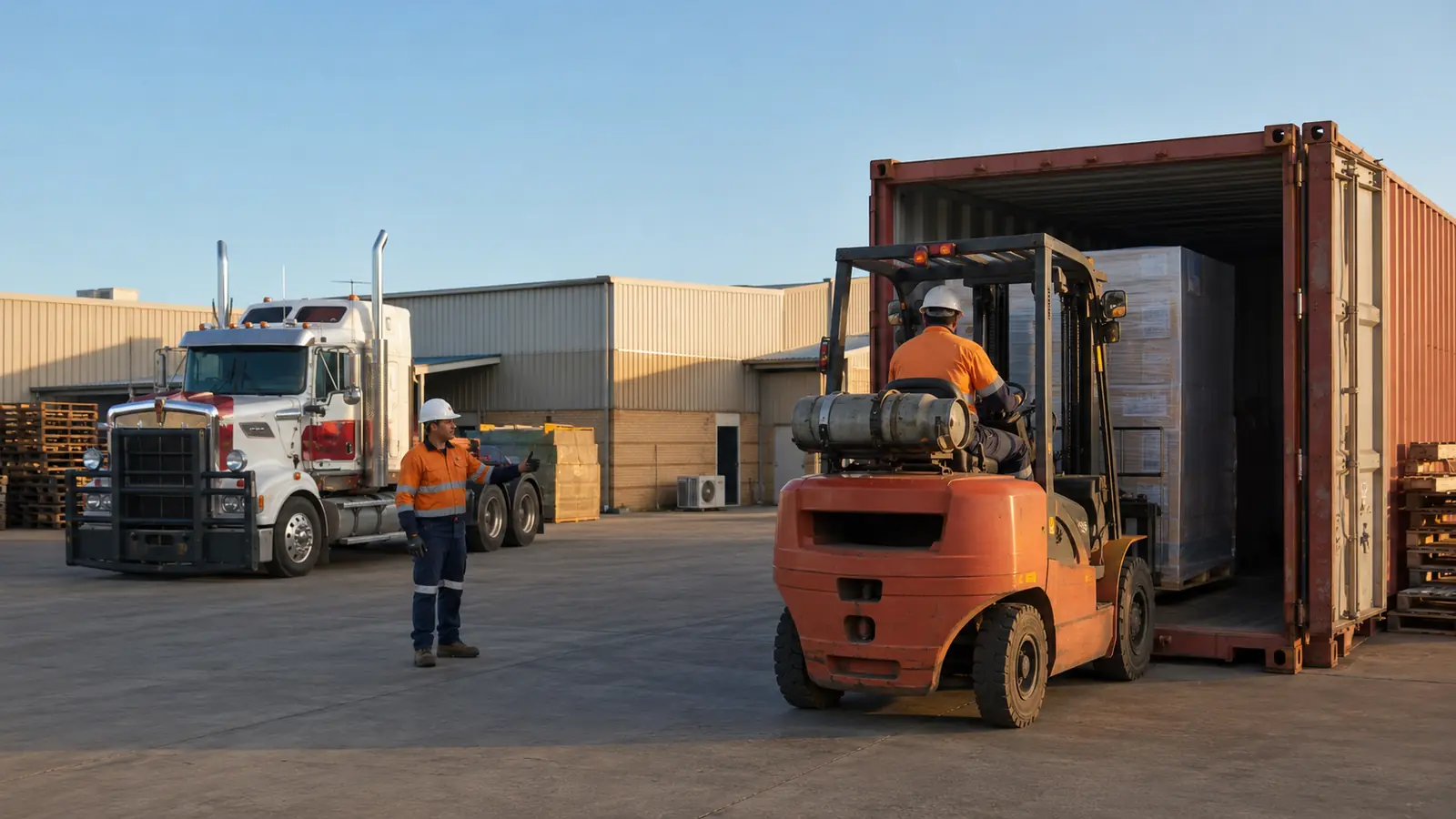
PLANNED AROUND THE CARGO AND THE SITE
When a shipping container reaches your depot, warehouse or project site, the cargo still needs to be opened, unloaded, checked and organised. We coordinate the container unpacking process around the freight, the site and what needs to happen next.
Australia Wide Haulage supports businesses receiving palletised, boxed, loose and project freight. We assess the container size, packing method, individual item weights, access conditions and available working space before confirming the unloading plan.
If the cargo needs to continue to another destination, our team can also discuss full truck load freight and other suitable transport options.
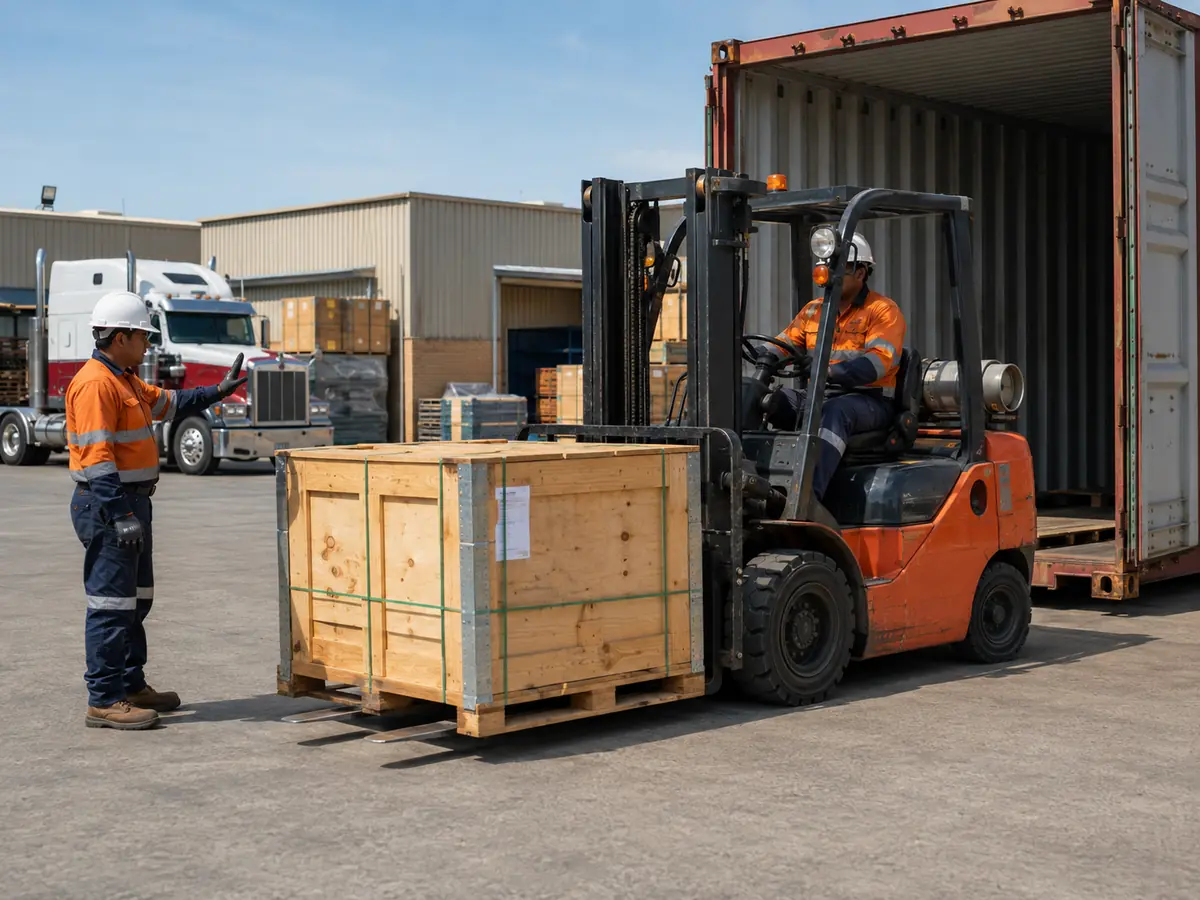
THE UNPACKING SCOPE
The service scope depends on the container, cargo and unloading location. Once we review the job, container unpacking may include:
Reviewing the container size, packing list, load plan, cargo dimensions and estimated weights
Checking site access, ground conditions, lighting and available working space
Confirming suitable handling equipment for the freight
Opening the container with care where cargo may have shifted in transit
Unloading palletised, boxed, loose or project freight
Completing agreed visual checks for obvious external damage
Sorting or staging goods for storage, collection or further distribution
Coordinating onward freight transport where required
The container doors are only one part of the job. Cargo condition, lifting requirements, working space and the next freight stage need to be considered before unloading begins.
Early planning helps identify shifted cargo, lifting requirements, restricted access and limited working space before the container doors open.
Goods can be unloaded, checked and staged in an agreed order, helping your team prepare them for storage, collection or project use.
Once the cargo is unpacked and staged, we can assess suitable full truck load, heavy machinery or remote delivery options for its next destination.
HOW THE SERVICE WORKS
Confirmed cargo and site information determines the equipment, working method, handling tasks and onward freight arrangements.
Send us the container size, cargo description, quantities, dimensions, weights, unloading address, access details and preferred timing.
We review the site, working area, cargo arrangement and handling requirements before confirming the scope and suitable equipment.
Our team opens the container with care, unloads the goods and completes the agreed checks, sorting or staging tasks.
We prepare the freight for storage, collection or onward transport according to the confirmed arrangements.

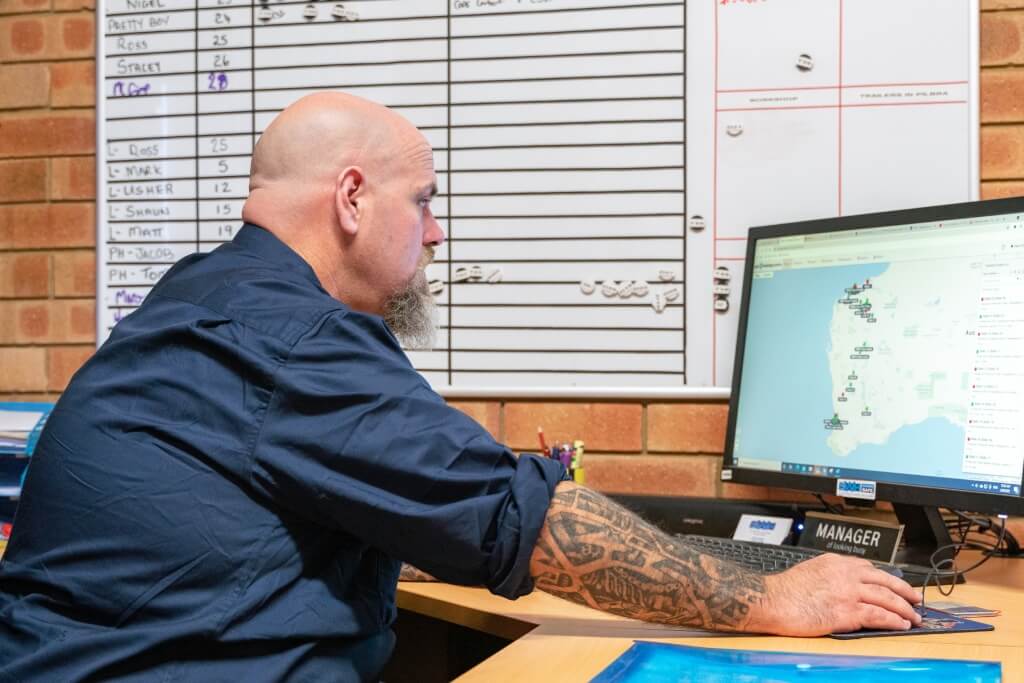
For freight moving beyond the unloading point, we can also discuss mine and remote transport, heavy machinery transport and remote delivery freight.
CUSTOMERS AND APPLICATIONS
We support businesses and project teams receiving containerised goods through ports, freight terminals, depots and commercial supply chains. Common customers and applications include:
Importers, wholesalers and distributors receiving bulk stock
Mining and resources businesses moving equipment or supplies to site
Construction, civil and infrastructure projects receiving materials or plant
Industrial, manufacturing, oil and gas operations
Renewable energy projects receiving solar, battery or other components
Agricultural and station businesses receiving machinery or supplies
Retailers receiving palletised, boxed or loose goods
A PRACTICAL WA LOGISTICS TEAM
Australia Wide Haulage is a family-owned Western Australian freight and logistics company. Our business originated in 1985 and became Australia Wide Haulage in January 2010.
Container unpacking often forms one part of a larger logistics job. Our team considers the cargo, unloading site, working space, handling requirements and next destination when planning the service.
Learn More About AWHExperience across freight, mining, construction, industrial and remote-area work
Trained and experienced team members and drivers
Practical planning around cargo, equipment and site access
Maintained trucks, trailers and transport equipment
Freight support across metro, regional and remote Western Australia
Clear communication with customers and site contacts
QUICK ANSWERS BEFORE YOU REQUEST A QUOTE
These answers cover the first planning considerations. The final scope, equipment and timing can only be confirmed after the container, cargo and site are assessed.
Yes. Container unpacking, container devanning, destuffing and container unloading are commonly used to describe removing freight from a shipping container. The exact service can include more than simply unloading the container. Depending on the job, freight may also need to be checked, sorted and prepared for storage or onward transport.
Container unpacking costs depend on the container, cargo and handling requirements rather than one standard rate. Factors that can affect the quote include container size, freight volume, whether goods are floor-loaded or palletised, individual item weights, site access, handling equipment, labour requirements and whether onward transport is needed. Providing cargo dimensions, weights, photos and a packing list where available helps us assess the job accurately.
The time required depends mainly on how the container is packed and what is inside it. A palletised container with suitable forklift access can require a different unloading process from a floor-loaded container containing loose cartons. Heavy machinery, fragile freight, sorting requirements and restricted site access can also affect the timeframe. We can provide a clearer indication once we understand the cargo and unpacking location.
Floor-loaded freight is packed directly into the container, while palletised freight is grouped onto pallets that can often be moved using mechanical handling equipment. Floor-loaded containers can require more individual handling and sorting. Palletised freight may be faster to remove where suitable equipment and access are available. The packing method is one of the details we consider when planning a container unpack.
Yes, we can assess container unpacking requirements involving machinery, equipment and larger industrial freight. We need accurate dimensions, weights and information about how the equipment is secured inside the container before confirming the handling plan. If the freight becomes an oversized road load once removed, we can also assess whether over-dimensional transport.
Container unpacking needs to account for shifted cargo, falling items, manual handling, mobile equipment, restricted working areas and the nature of the freight itself. The unloading approach should be planned around the actual container, site and cargo rather than assuming every container can be handled the same way. Where hazardous materials are involved, additional handling and transport requirements may apply. Our guide explains more about transporting dangerous goods.
Outsourcing can make sense when your business does not have the labour, equipment or freight experience required to unload the container safely and efficiently. An in-house team may suit businesses that regularly process similar containers and already have suitable facilities and equipment. For occasional imports, heavy cargo or freight requiring onward transport, using an experienced freight provider can also reduce the number of separate contractors you need to coordinate.
Look for a provider with experience handling your type of cargo, suitable equipment, trained personnel and the ability to explain how the unload will be planned. You should also confirm what cargo they can handle, what equipment will be required, whether site access needs to be assessed, how heavy or unusual items will be handled, whether freight can be sorted after unloading and whether onward transport can be arranged.
Yes. Where the freight falls within our transport capability, we can discuss onward transport as part of the same logistics requirement. Larger consignments travelling to one destination may suit our full truck load freight service. For goods continuing into regional or remote Western Australia, we can also discuss remote delivery freight.
Yes, AWH can assess container unpacking and associated freight requirements beyond Perth depending on the cargo, location, site access and equipment required. Our wider transport operations support customers across Western Australia, including regional and remote areas. For work outside Perth, send us the container location, cargo details and final freight destination so we can determine the appropriate arrangement.
Provide as much information about the container and cargo as possible. Useful details include the container size, unpacking location, cargo description, whether freight is palletised or floor-loaded, number of packages or pallets, item dimensions and weights, total freight weight where known, photos or packing documentation, heavy or fragile items, site access information, preferred timing and the final destination if onward transport is required. This gives our team enough information to determine the likely labour, equipment and transport requirements before the job is scheduled.
PLAN THE UNPACKING JOB WITH AWH
Send us the container, cargo, unloading location and timing details. Our team will review the handling requirements and any onward transport needed for your job.
REQUEST A QUOTE
Provide the freight details, unloading location, access requirements and preferred timing. Our team will review your enquiry and contact you.