


Route and permit planning
We assess the proposed route, load dimensions and operating conditions, then coordinate relevant permits, authorities, traffic control and escorts where required.

OVERSIZED & OVERMASS HAULAGE · WESTERN AUSTRALIA
Oversized and overmass haulage planned around your load dimensions, route, permit conditions and delivery site.
Every load requires a separate assessment. Send the confirmed dimensions, weight and proposed route so our team can check service suitability.
PLANNED FOR THE LOAD AND THE ROUTE
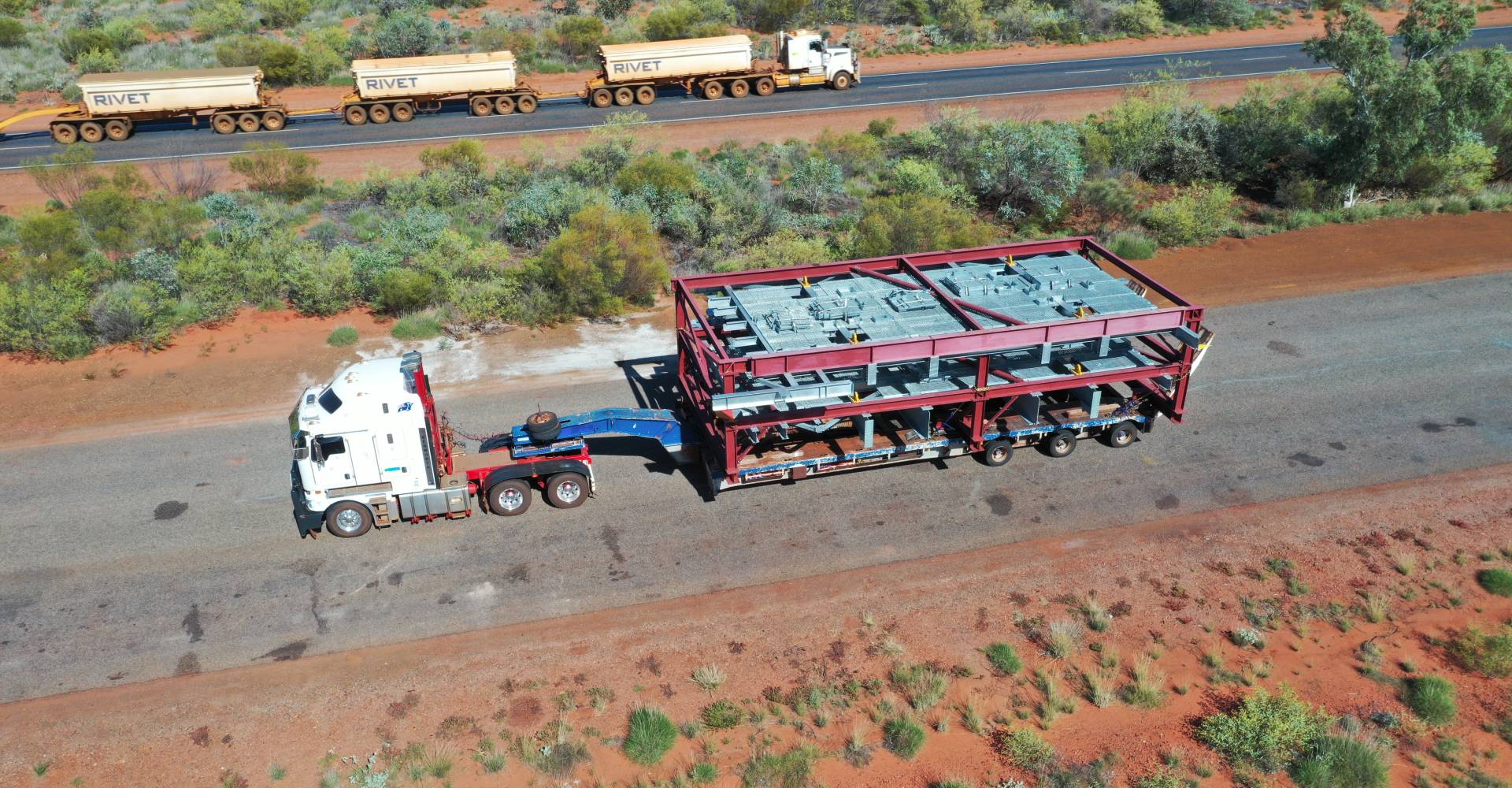
Australia Wide Haulage transports over-length, oversized and overmass loads across Western Australia. We plan each movement around the load dimensions and weight, collection and delivery sites, route conditions, equipment requirements and relevant approvals.
Our over-dimensional transport capability supports agricultural machinery, construction vehicles, building infrastructure, bridge components, plant and large fabrications. We use flat deck, drop deck, extendable and quad spread deck low-loader trailers according to the confirmed load requirements.
If you are unsure whether your freight falls outside standard transport limits, read our guide to what makes a load over-dimensional in Australia.
If your job involves excavators, loaders, graders or other mobile plant, learn more about our heavy machinery transport capability.
END-TO-END MOVEMENT PLANNING
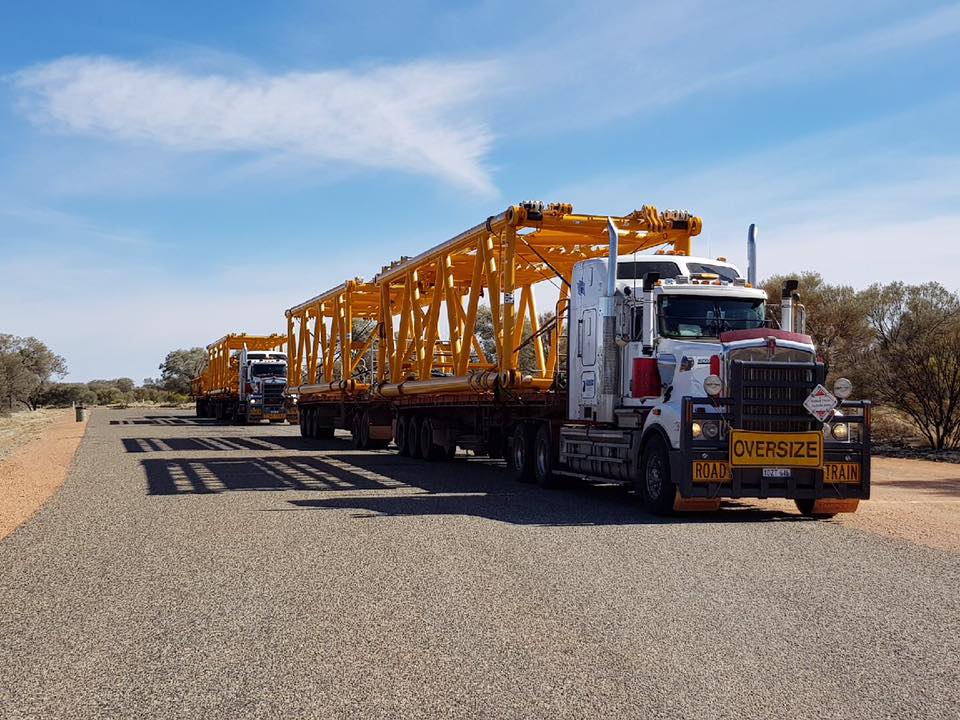
The transport plan depends on the load, route and delivery requirements. Our service can include:
Read the Regulations and Permits GuideReviewing the load type, dimensions, weight and centre of gravity
Selecting a suitable flat deck, drop deck, extendable or quad spread deck low-loader trailer
Planning the route around road access, clearances, restrictions and changing conditions
Coordinating traffic control and heavy-load escorts where required
Liaising with relevant authorities about permits and transport conditions
Planning load restraint and securing requirements
Coordinating craneage for heavy loads where it forms part of the agreed scope
Delivering equipment and freight to metro, regional and remote WA locations
The equipment is only one part of the movement. Route conditions, approvals, loading and delivery access all need to work together.
We assess the proposed route, load dimensions and operating conditions, then coordinate relevant permits, authorities, traffic control and escorts where required.
Our flat deck, drop deck, extendable and quad spread deck low-loader options help us plan around different lengths, heights, weights and loading requirements.
We coordinate collection, transport and delivery for metropolitan, regional and remote WA locations around route, timing and site requirements.
HOW THE SERVICE WORKS
Confirmed load information determines the trailer configuration, route assessment, approvals and delivery-site arrangements.
Send us the load description, dimensions, weight, photographs or drawings, collection point, destination, site access details and preferred timing.
We review the trailer configuration, loading method, route conditions, clearances and access at both ends of the journey.
Our team identifies the relevant permit, authority, traffic control and escort requirements before confirming the transport arrangements.
Our trained driver completes the movement according to the agreed route, timing, transport conditions and delivery-site arrangements.

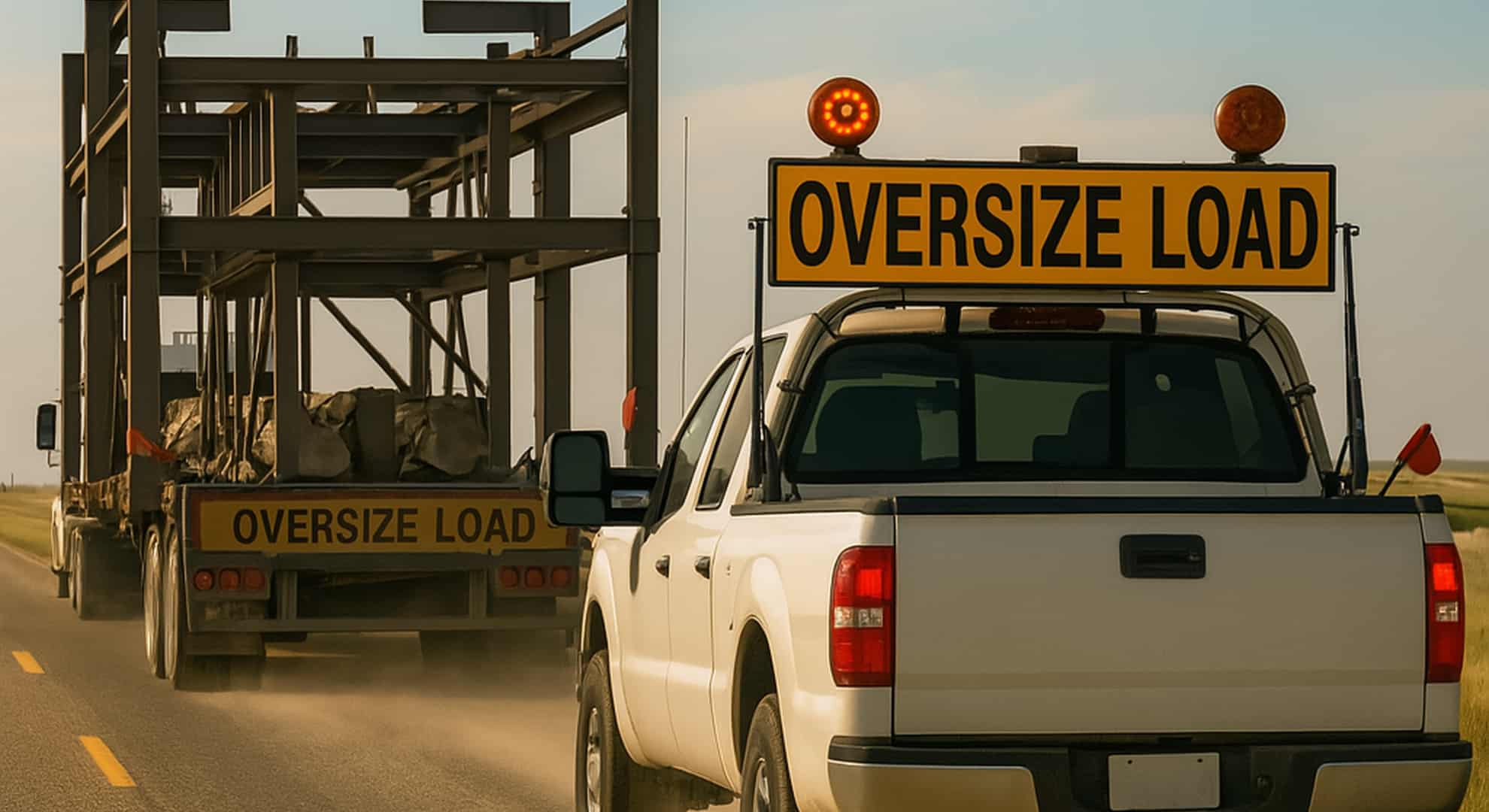
Every load requires a separate assessment. Send us the confirmed dimensions, weight and route so we can determine whether our equipment and service are suitable.
COMMON LOADS AND APPLICATIONS
We assess oversized and overmass freight for businesses, contractors and project teams across Western Australia. Common loads and applications include:
Agricultural machinery, including harvesters and grain augers
Construction and civil equipment that cannot be divided for standard transport
Building infrastructure and structural components
Bridge components and large fabrications
Mining plant, machinery and project equipment
Heavy freight requiring craneage or specialised loading arrangements
Equipment for regional and remote WA sites
A PRACTICAL WA HAULAGE TEAM
Australia Wide Haulage combines experienced drivers, specialised trailer options and practical route planning for oversized and overmass freight across WA.
Explore Mine and Remote TransportExperience transporting agricultural machinery, construction equipment, infrastructure components, plant and fabrications
Flat deck, drop deck, extendable and quad spread deck low-loader trailer options
Route, traffic control, escort and permit coordination
Load restraint planning for the collection, journey and delivery site
Delivery support for metropolitan, regional and remote locations
Clear communication with customers, site contacts and relevant authorities
QUICK ANSWERS BEFORE YOU REQUEST A QUOTE
These answers explain the first planning considerations. The final requirements can only be confirmed once the load, vehicle combination and route are assessed.
Call (08) 9454 3277A load is over-dimensional when the loaded vehicle exceeds a dimension limit that applies to standard road transport. The limits and operating requirements depend on the vehicle combination, load, road network and jurisdiction. We assess the confirmed dimensions, weight and proposed route before planning the movement.
Measure the cargo at its longest, widest and highest points, including fixed attachments and protrusions. Provide the total weight, photographs or drawings, lifting points and centre-of-gravity details where available. We also need the collection point, destination and site access information to assess the job.
Permit, pilot, escort and traffic control requirements depend on the loaded vehicle dimensions and mass, vehicle combination, route and applicable operating conditions. We review these factors and liaise with the relevant authorities before confirming the transport plan.
Over-dimensional transport may cost more because the job can require specialised trailers, permits, route surveys, pilot or escort vehicles, traffic control, craneage and restricted travel times. The collection and delivery sites, distance, load dimensions and loading method also affect the quote.
PLAN THE MOVEMENT WITH AWH
Send the load dimensions, weight, collection point, destination and access details. Our team will review the movement and confirm what is needed to prepare an accurate quote.
REQUEST A QUOTE
Provide the freight details, locations, access requirements and preferred timing. Our team will review your enquiry and contact you.