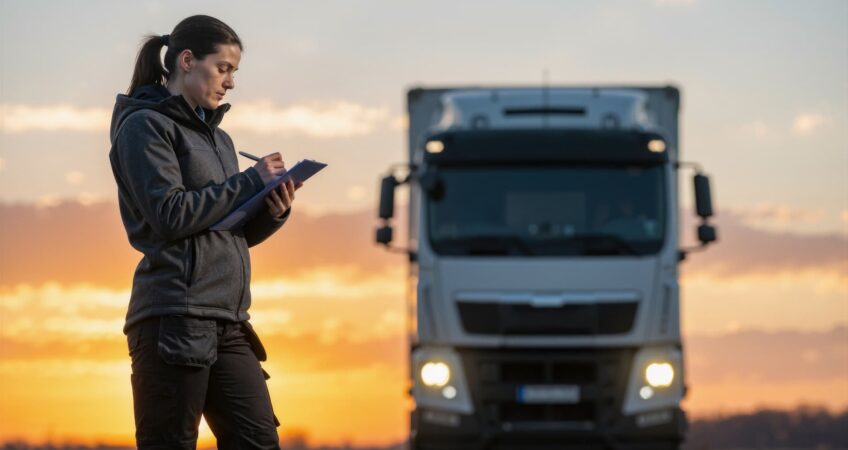
Heavy haulage planning WA requires strict regulatory compliance, stringent safety measures, and comprehensive risk assessment.
When you imagine hauling a 40-metre wind turbine across WA, you likely wonder what kind of equipment could even accomplish that. But heavy haulage project planning is far more complex than just lining up specialty equipment.
Heavy haulage also involves limited infrastructure in remote areas, weather-related road closures, weight restrictions, tight turns, and complicated permits.
After transporting thousands of tonnes of equipment safely and on time, we know the strategies needed to tackle these challenges.
Here, we’ll share the step-by-step guide to navigating the complexities of oversized transport planning.
Step 1 – Define the Load and Transport Requirements
Understanding Load Dimensions and Weight
The first step in oversized transport planning is a comprehensive freight assessment. Accurate measurements are critical for maximising efficiency, obtaining the proper permits, and ensuring safety.
A detailed cargo analysis should accurately identify the freights:
- Length
- Width
- Height
- Gross mass
- Special handling requirements or concerns
- Specific restraint needs
Determining the Right Transport Method
Standard heavy haulage vs over dimensional transport is determined by Australia’s specifications.
These vary based on territory and state, but they generally refer to:
- Oversized: Items exceeding 30 tonnes
- Overdimensional: Cargo exceeding 2.5 metres wide, 4.3 metres high, or 19 metres long
For oversized or overdimensional transport, specialised machinery, adherence to regulations, and proper permits are required.
Learn more about what determines if an item is oversized or overdimensional here: Heavy Equipment & Machinery for Haulage – Classification Guide.
Step 2 – Assess Routes, Access, and Site Conditions
Route Surveys and Road Constraints
A route survey is a detailed inspection of the path of transport to identify obstacles or concerns, such as:
- Overhead obstructions and clearance heights
- Tight turns
- Bridges
- Road-widths
- Gradant limitations
- Weight-restricted roads
- Construction zones
Once these potential obstacles are identified, advanced route mapping tools can determine the most efficient, safest route.
A detailed contingency plan is also developed to mitigate any unexpected road closures or traffic issues. This maximises safety and reduces the risk of delays.
Site Access at Pickup and Delivery
Site access at pickup and delivery requires meticulous planning to ensure safety and keep the transport process on schedule.
Securing site access and safe pickup and delivery requires:
- Continuous, clear coordination with site managers and contractors
- Cleared access routes
- Comprehensive safety briefings for any personnel who will be present
- Clearly marked exclusion zones
- Risk assessments
- Appropriately sized hardstands
- Clear crane access
- Designated laydown areas
- Appropriate ground conditions that will support the weight of the equipment during the loading or unloading process
Learn our recommendations for prepping your site for heavy haulage freight here: How to Prepare Your Site for Heavy Haulage Delivery.
Step 3 – Permits, Approvals, and Compliance
Oversize and Overweight Permits
Oversized transport planning also requires proper permits from local councils and state road authorities, such as Main Roads WA.
Determining which permits are required and applying for them is a complex, time-consuming process. You’ll need detailed documentation showing proposed routes and exact load specifications.
Depending on the type of freight and the state or territory, WA approval timelines often take several weeks.
Repeat after us: Obtaining permits is not something to leave for the last minute.
Learn more about what permits are needed and the approval process here: Oversized Load Regulation and Permits: A Complete Guide.
Escort Vehicles and Traffic Management
Many oversized or overdimensional loads will require escort vehicles. Escort vehicles guide the main haulage vehicle, warn other drivers, help manage traffic, and enhance safety.
Regulations surrounding escort vehicles in WA are complex and vary based on region, load type, and freight size. We also recommend researching regulations on night movements, curfews, and temporary traffic management along your planned route.
Learn more about escort vehicle requirements in heavy equipment transport WA here: Heavy Haulage Escort Vehicles.
Step 4 – Selecting Equipment and Trailers
Matching Trailers to the Load
Matching the appropriate trailer to the load ensures proper weight distribution and load stability. This enhances efficiency and safety, ensuring a smooth, timely transport.
Some common types of trailers and heavy haulage equipment include:
- Pallet freight trailers for transporting goods, even during harsh conditions or challenging weather
- Single semi-trailers carrying heavier loads such as livestock, bulk materials, hazardous chemicals, industrial items, and consumer goods
- Drop deck trailers for taller cargo
- Extendable trailers for large farm equipment or agricultural goods
- 50 Tonne or 75-tonne Quad Spread Deck and Dolly for transporting oversized cargo, such as construction materials or machinery
- B-Doubles (prime mover towing two semi-trailers) for transporting dangerous goods, liquids, or hazardous materials
Learn more about common trailers in the heavy haulage industry here: Types of Trailers in Trucking and Freight Industry.
Securing and Load Restraint Planning
Oversized freight must be secured in compliance with Australian load restraint standards. These standards are governed by Australia’s relevant state laws and the
National Heavy Vehicle Regulator (NHVR) and the Load Restraint Guide.
Learn More: Tips to Safely Load and Unload Heavy Haulage Equipment
Step 5 – Scheduling, Timing, and Risk Management
Timing Movements Around Site and Road Conditions
One of the biggest strengths of successful heavy haulage planning is adaptability. Establishing contingencies and pre-planning alternate routes is imperative to avoiding delays in the event of accidents or weather-related issues.
Weather impacts play a significant role in heavy haulage planning WA. From cyclones and bushfires to flash floods, Australia faces frequent weather-related logistics challenges.
Fatigue Management and Driver Compliance
Managing long-distance WA routes involves complex safety and legal obligations. One of the most important aspects of driver safety is fatigue management.
Driver fatigue can cause impaired judgment and reduced reaction times that pose alarming safety risks. Because of this, fatigue management is one of our main focuses.
The safety of your freight, staff, our drivers, and road users is our top priority at Australia Wide Haulage. We adhere to strict fatigue management practices as part of our non-negotiable commitment to safety.
Learn more about the importance of fatigue management in our post here: Truck Driver Fatigue Management Guide – Key Strategies.
Step 6 – Coordinating Delivery and On-Site Execution
Communication Across All Stakeholders
Clear, transparent communication across all stakeholders is key to coordinating safe transport and delivery. Stakeholder communication keeps drivers, regulators, customers, and all involved parties in the loop regarding timelines, delays, and progress.
Heavy haulage in Western Australia will likely require communicating with:
- The transport team
- Crane crews
- Site supervisors
- Local councils
- Escort vehicles
- Customers
- Logistics teams
Managing Remote and Regional Deliveries
Planning for remote and regional deliveries requires extra knowledge and time due to limited infrastructure.
For instance, mine sites can be hundreds of miles from nearby cities and located in areas with zero cell service.
Learn more about how we manage challenging remote conditions here: Remote Delivery Services Perth – Reliable Remote Freight Delivery.
Why Working With an Experienced Heavy Haulage Partner Matters
Benefits of Hiring a Heavy Haulage Company include:
- Reduce safety risks, cost, and downtime
- Prevents common mistakes
- End-to-end capability from planning through delivery
- Avoid fines
- Protect equipment and freight and avoid costly repairs
- Maximum safety for your equipment, staff, and other road users
- Eliminate the need to invest in specialty heavy haulage equipment
At Australia Wide Haulage, our extensive fleet and highly trained drivers can handle any oversized transport. From drop decks to B-Doubles to oversize road trains, our modern line haul fleet can meet your heavy haulage needs.
We offer end-to-end heavy haulage Western Australia project management that includes:
- Obtaining all appropriate permits
- Scheduling of pilot or escort vehicles
- Communication across all channels, including coordination with local authorities, utility companies, and subcontractors
- Comprehensive risk management, including proper insurance coverage and strict safety management systems
- Correct load distribution
- Experienced, motivated drivers who are classified as the best in their field
Learn more about our heavy equipment transport WA here:
- Freight Port Hedland – Our AWH Port Hedland Transport Services
- Freight Karratha – Our AWH Karratha Transport Services
Planning Heavy Haulage Western Australian Projects
Safe and successful heavy haulage transport WA demands intricate planning, detailed routes, appropriate communication, and proper permits.
Heavy haulage project planning is vital for safety, meeting project timelines, and protecting valuable equipment and freight.
With years of experience across mining, infrastructure, and remote projects, we understand how to manage the unique challenges of heavy haulage.
If you are planning a heavy haulage project in Western Australia, we are here to help. Contact our team to discuss your load, timelines, and logistics requirements.