
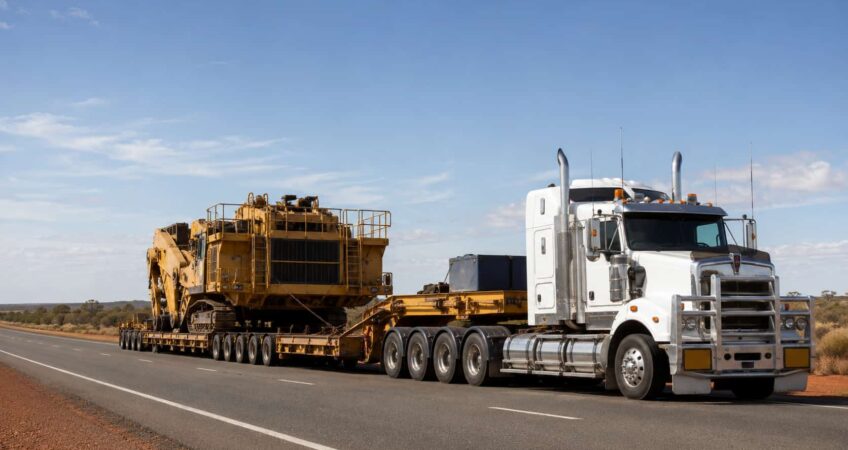
A load is considered over dimensional when the vehicle and its load exceed the standard legal size limits for road transport. This may happen because the load is too wide, too high, too long, or creates an overhang that affects how safely it can move on public roads.
In Australia, over-dimensional transport is common across mining, construction, agriculture, infrastructure and remote project work. Large machinery, transportable buildings, tanks, long steel, renewable energy components and oversized equipment often need more than a standard truck and trailer.
The key point is that the full loaded vehicle must be assessed, not just the item being moved. A machine may seem manageable while sitting on site, but once it is loaded onto a trailer, the total height, width, length or weight may trigger additional transport requirements.
At Australia Wide Haulage, we regularly move freight where size, access and compliance need to be planned before the truck leaves site. Understanding what makes a load over dimensional is the first step in choosing the right over-dimensional transport method, route, permits and support vehicles.
What Does Over Dimensional Mean?
Over dimensional means the loaded vehicle is larger than the standard size limits allowed for general road transport. It usually refers to a load that exceeds the permitted width, height, length, rear overhang or projection limits.
This is different from standard freight, where the goods fit within normal truck and trailer dimensions. With over-dimensional freight, the size of the load changes how the vehicle uses the road. It may need more lane space, more turning room, extra height clearance or a route that avoids certain bridges, powerlines and restricted roads.
It is also important to understand that over dimensional does not always mean overweight. A load can be over dimensional because it is too wide or too tall, even if it is not especially heavy. On the other hand, a load can be overmass without being over dimensional.
For example, an excavator with wide tracks may become over dimensional once loaded onto a trailer. A long steel beam may exceed length limits. A transportable building may be too wide for standard road movement. Each load needs to be checked based on its actual loaded dimensions, not assumptions made from its appearance on site.
Standard Heavy Vehicle Dimension Limits in Australia
The standard dimension limits help determine whether a load may be classed as over dimensional. These limits are based on the size of the vehicle and its load together, not the freight item on its own.
As a general guide, many heavy vehicles in Australia are limited to:
| Dimension | Common general limit | What this means in practice |
|---|---|---|
| Width | 2.5 metres | A load wider than this may be considered overwidth |
| Height | 4.3 metres | A taller loaded vehicle may need clearance checks and approval |
| Length | 19 metres | Longer combinations may need restricted access approval |
| Gross mass | 42.5 tonnes in WA RAV guidance | Heavier loads may trigger overmass or restricted access requirements |
These figures are a starting point, not the full rulebook. Some vehicle types and combinations have different permitted dimensions. Some movements can also operate under specific notices, orders, networks or permits.
Western Australia has its own Restricted Access Vehicle permit and order system through Main Roads WA. In many other states and territories, heavy vehicle access is managed under the Heavy Vehicle National Law framework through the National Heavy Vehicle Regulator.
This is why early planning matters. A load that is legal on one vehicle, route or permit arrangement may not be legal in another. Before transport is arranged, the loaded width, height, length, mass, route and state requirements all need to be checked.
For businesses moving heavy or oversized freight across WA, this is one of the reasons heavy haulage planning in WA is so important.
What Are the Main Ways a Load Becomes Over Dimensional?
A load can become over dimensional in several ways. In most cases, the issue is not just the size of the item itself, but how that item sits once it is loaded onto the truck or trailer.
The most common triggers are width, height, length, overhang and mass. Each one affects transport planning in a different way.
The Load Is Too Wide
Width is one of the most common reasons a load becomes over dimensional. Machinery, tanks, site buildings, agricultural equipment and construction materials can easily exceed standard road width once loaded.
A wide load may need more lane space, careful traffic management and a route that avoids narrow roads, tight bridges or limited shoulder clearance. Depending on the width and route, pilot or escort vehicles may also be required.
Common examples include:
- Excavators with wide tracks
- Dozers with blades attached
- Large tanks
- Transportable buildings
- Agricultural machinery
- Industrial equipment
For these loads, the goal is not only to fit the freight on the trailer. The movement must also be safe, compliant and practical across the full route. This is especially important for heavy machinery transport, where the load’s working size can make road movement more complex.
The Load Is Too High
Height becomes an issue when the total loaded height exceeds the standard limit for road transport. This includes the height of the trailer, the load itself and any attachments that remain fitted during transport.
Overheight loads need careful planning because they can create clearance risks along the route. Bridges, gantries, powerlines, trees, rail crossings, workshop doors and site entrances can all become obstacles if the loaded height has not been checked properly.
Common examples include:
- Tall machinery
- Industrial tanks
- Silos
- Large site sheds
- Plant equipment
- Boats on trailers
- Oversized containers or modules
In some cases, the right trailer can reduce the total travel height. A drop deck trailer or low loader may help keep the load lower to the road, which can improve clearance and reduce route restrictions.
The important measurement is the loaded height from ground level. A machine that appears acceptable while sitting on site may become overheight once it is placed on a trailer.
The Load Is Too Long
Length becomes a problem when the total vehicle combination exceeds the standard length allowed for general road transport. This may be caused by the load itself, the trailer required to carry it, or the full truck and trailer setup needed to move it safely.
Long loads can create challenges that are not obvious at first glance. They may need more space to turn, more room to enter and exit sites, and a route that avoids tight intersections, roundabouts, narrow streets or sharp bends.
Common examples include:
- Long steel beams
- Pipes and poles
- Bridge components
- Wind turbine blades
- Precast construction materials
- Long machinery attachments
- Oversized structural components
For these movements, the question is not only whether the load fits on the trailer. We also need to consider how the vehicle will move through the road network, turn into site, avoid roadside hazards and reach the delivery point without creating unnecessary risk or delay.
This is common in major project work, where freight may include long structural components, prefabricated assets or specialised equipment. These types of movements often support broader infrastructure delivery, as explained in our article on how heavy haulage supports major infrastructure projects.
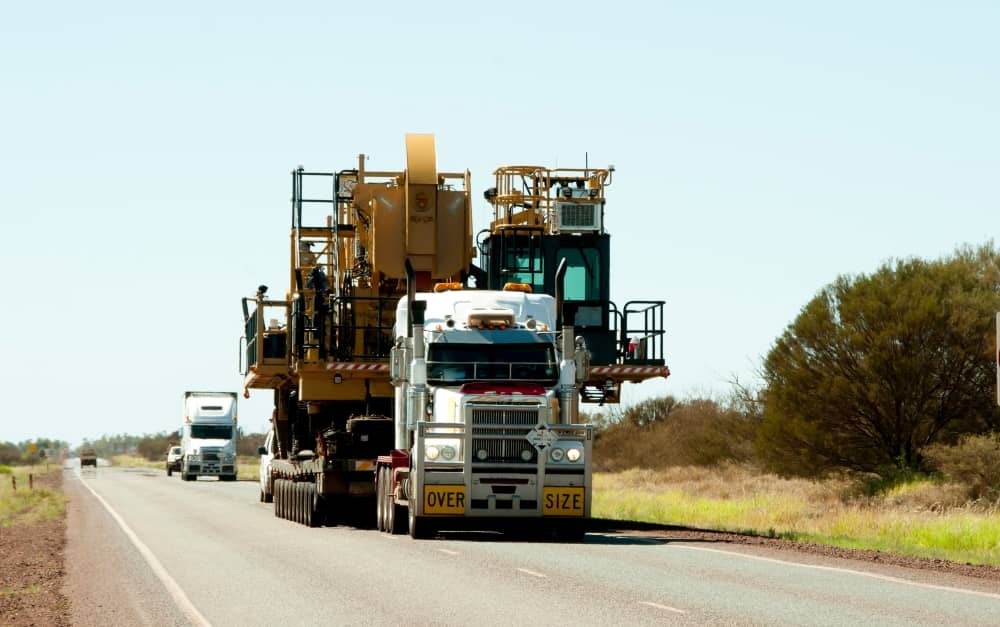
The Load Has Excessive Overhang or Projection
A load may also become over dimensional because it projects too far beyond the vehicle or trailer. This can include rear overhang, front projection or side projection.
Overhang matters because it changes how the vehicle behaves on the road. A projecting load can affect turning, braking, visibility, rear clearance and how safely other road users can pass or follow the vehicle.
Common examples include:
- Long beams or pipes
- Machinery arms or booms
- Equipment attachments
- Poles or structural steel
- Loads that extend beyond the rear of the trailer
Even if the load is not especially wide or high, excessive projection can still create safety and compliance issues. Depending on the load and route, additional warning equipment, signage, lighting, flags or permit conditions may be required.
This is why every part of the load needs to be measured before transport. The overall dimensions of the loaded vehicle are what determine the planning requirements, not just the main body of the freight.
The Load Is Also Overmass
Over dimensional and overmass are related, but they are not the same thing. Over dimensional refers to size. Overmass refers to weight.
A load may be overmass if the vehicle and load exceed the standard gross mass, axle mass or bridge loading limits. This can happen with heavy machinery, mining equipment, industrial plant, large generators, transformers or dense construction materials.
Some loads are over dimensional but not overmass. Others are overmass but fit within standard dimensions. Many heavy haulage movements involve both, which means the job needs to be assessed from a size and weight perspective before transport begins.
Overmass loads require careful planning because weight affects more than the truck. It can influence trailer selection, axle configuration, road access, bridge restrictions, braking performance, loading requirements and permit conditions.
Before moving a heavy item, we need to understand both the physical dimensions and the mass of the load. This helps determine whether standard transport is suitable or whether restricted access, specialist trailers or additional approvals are required.
If you are unsure whether your freight sits in this category, our guide on what classifies as heavy equipment for heavy haulage explains the types of machinery and equipment that often need specialist transport.
Over Dimensional vs Oversize vs Overmass: What Is the Difference?
Transport terms can become confusing because over dimensional, oversize, overmass and OSOM are often used in the same conversation. They are connected, but they do not always mean the same thing.
| Term | What it means | Simple example |
| Over dimensional | The loaded vehicle exceeds standard size limits | A wide excavator on a trailer |
| Oversize | A common industry term for a load over standard dimensions | A long steel beam or large tank |
| Overmass | The loaded vehicle exceeds standard weight limits | Heavy mining machinery |
| OSOM | Oversize and/or overmass | Equipment that is both wide and heavy |
In everyday transport discussions, “oversize” and “over dimensional” are often used in a similar way. The important point is to confirm exactly which limit has been exceeded.
A load that is too wide may need different planning than a load that is too high. A load that is too heavy may require different trailer, axle and route checks again. When a load is both oversize and overmass, the planning becomes more involved because the job needs to account for size, weight, road access and permit conditions together.
This is why we assess the full vehicle and load combination before making transport recommendations. The correct approach depends on what makes the load restricted in the first place.
When Does an Over-Dimensional Load Need a Permit?
An over-dimensional load may need a permit when the vehicle and load exceed the standard limits for general road use. This can apply to width, height, length, mass, overhang or the type of vehicle combination being used.
A permit may also be needed when the load cannot move under an existing notice, order or approved access arrangement. In simple terms, if the loaded vehicle does not fit within standard road rules or approved networks, the movement needs to be assessed before it can go ahead.
Permit requirements can be triggered by:
- Loads wider than the standard legal width
- Loads higher than the standard legal height
- Long vehicle combinations
- Excessive rear, front or side projection
- Loads that exceed gross mass or axle mass limits
- Routes with bridges, rail crossings or overhead hazards
- Roads that are not approved for restricted access vehicles
- Loads that require pilot or escort vehicles
- Movements through regional towns, urban areas or remote roads with limited access
A permit is not just paperwork. It confirms whether a vehicle and load can use a particular route under specific conditions. These conditions may include approved roads, travel times, speed limits, warning signs, lighting, pilot vehicles, escort requirements and bridge restrictions.
In Western Australia, over-dimensional and restricted access movements are managed through Main Roads WA. In many other Australian states and territories, heavy vehicle access is managed under the Heavy Vehicle National Law framework.
For businesses, the safest approach is to check permit requirements early. Waiting until the load is ready to move can create delays, especially if the route needs to be assessed, escorts need to be organised or a different trailer is required.
For a deeper look at the compliance side, read our guide to oversized load transport regulations.
Why Over-Dimensional Loads Need Careful Route Planning
Over-dimensional loads need more route planning than standard freight because their size can affect how safely and legally they move through the road network. It is not enough to know the pickup point and delivery point. The full route needs to be suitable for the vehicle, trailer and loaded dimensions.
A route that works for a standard truck may not work for an over-dimensional load. The vehicle may need extra turning room, wider roads, better shoulder clearance, higher overhead clearance or access to approved restricted routes.
Route planning may need to consider:
- Road width and lane space
- Bridge height and weight restrictions
- Powerlines and overhead structures
- Rail crossings
- Roundabouts and tight turns
- Roadworks and temporary closures
- Traffic volume and travel time restrictions
- Road surface condition
- Weather conditions
- Regional and remote access roads
- Mine site or project site entry points
- Loading and unloading space at each end
For many jobs, the most direct route is not always the best route. A longer route may be safer, more compliant or more practical if it avoids low bridges, narrow sections, tight town centres or roads that are not approved for the loaded vehicle.
Route planning can also affect cost. Detours, escort requirements, restricted travel windows and fuel usage can all influence the final transport price. We cover related cost factors in our article on how oil prices affect logistics and freight costs.
At Australia Wide Haulage, we look at how the load will move through each stage of the journey. That includes leaving the pickup site, travelling through the approved route and entering the delivery site safely.
For more detail on this process, read our guide to planning oversized transport.
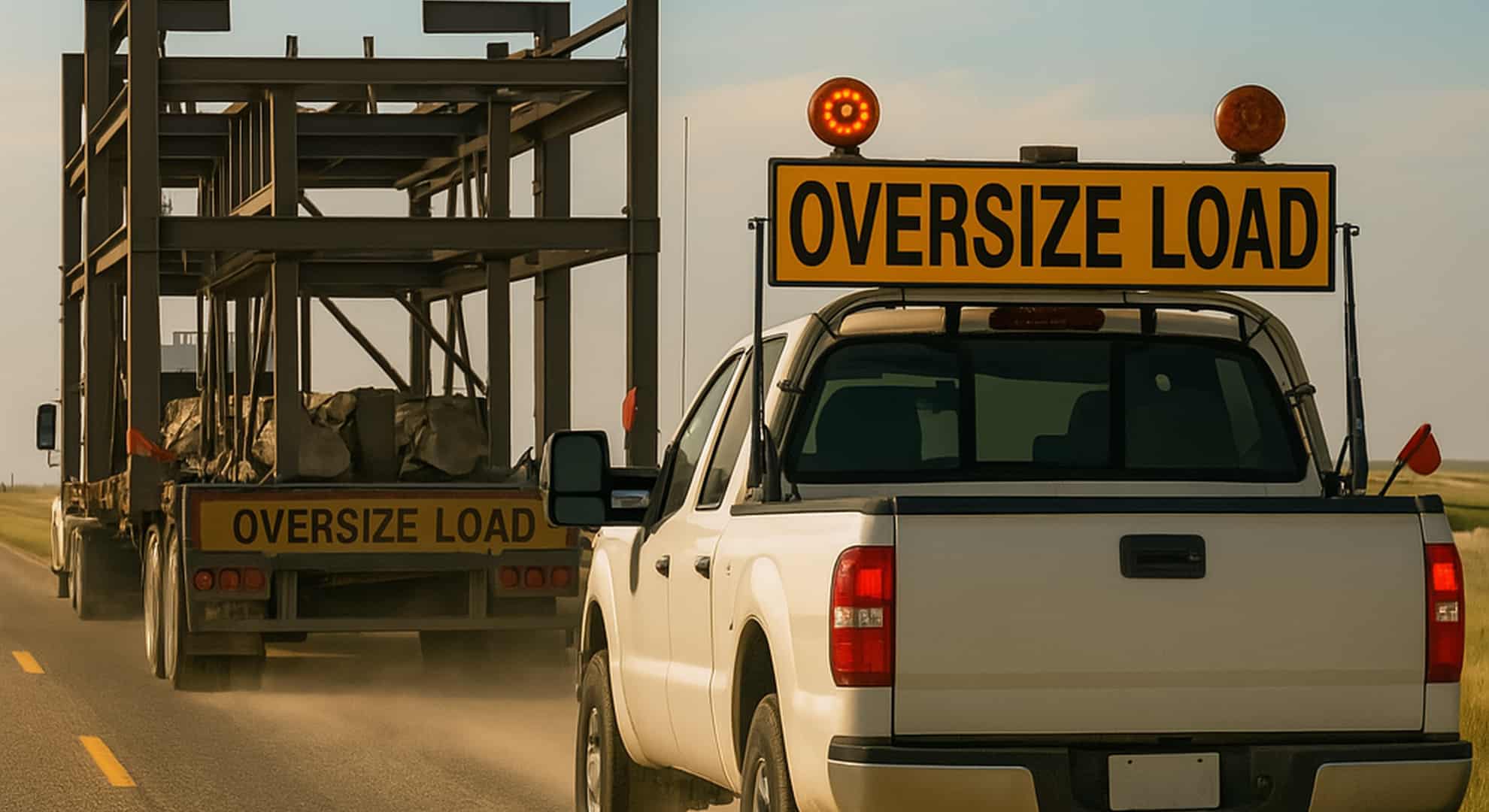
When Are Pilot or Escort Vehicles Required?
Pilot and escort vehicles may be required when an over-dimensional load needs extra support to move safely through public roads. The requirement depends on the size of the load, the route, the state or territory, and the conditions attached to the movement approval.
A pilot vehicle helps warn other road users that a large load is approaching. It can also assist with traffic awareness, road positioning and clearance through tighter sections of the route.
For larger or more complex movements, escort vehicles may also be required. In some cases, police escorts may be needed, particularly where the load affects traffic flow, uses more road space or requires controlled movement through certain areas.
Pilot and escort requirements may be influenced by:
- The width of the load
- The length of the vehicle combination
- The route being used
- The time of travel
- Traffic conditions
- Road width and shoulder clearance
- Bridge, rail or infrastructure restrictions
- Permit conditions
- Local road authority requirements
These vehicles are not just an added formality. They help manage the extra risk created by a load that is wider, longer, slower or less manoeuvrable than standard freight.
For businesses planning an over-dimensional move, escort requirements should be checked early. They can affect timing, cost, availability and how the movement is scheduled.
Our guide to heavy haulage escort vehicles explains how these support vehicles help keep oversized movements safer and more controlled.
Common Examples of Over-Dimensional Loads
Over-dimensional loads are common across industries where equipment, materials or structures are too large for standard transport. In many cases, these items are designed for worksite performance, not easy road movement.
This is why so many sectors depend on specialist heavy haulage. Mining, agriculture, construction, civil works, energy, infrastructure and marine industries all rely on transport providers that understand large and difficult freight. We cover this broader industry demand in our article on what industries rely most on heavy haulage in Australia.
Mining and Civil Equipment
Mining and civil equipment often becomes over dimensional because of its size, width or operating attachments. Excavators, dozers, loaders, graders, drill rigs, crushers and screens may all need specialist transport once loaded onto a trailer.
Even when attachments can be removed, the loaded dimensions still need to be checked before transport.
Mining transport can also involve remote access, strict site requirements and equipment that needs careful planning from pickup through to delivery. This is why mine and remote transport often needs more preparation than standard freight.
Construction and Infrastructure Materials
Large construction materials can also exceed standard road dimensions. This includes long steel beams, bridge components, concrete panels, tanks, plant rooms, site offices and prefabricated structures.
These loads often need careful route planning because length, width and site access can all create challenges.
For major works, over-dimensional freight may be only one part of a larger project timeline. Delays can affect crane bookings, site crews and installation schedules. Early planning helps keep infrastructure projects moving.
Agricultural Machinery
Agricultural machinery is often built wide for field performance. Harvesters, tractors, seeders, sprayers and large implements may be too wide or too awkward for standard freight movement.
Regional routes can also add complexity, especially where roads are narrow or shoulder space is limited.
Renewable Energy Components
Renewable energy projects often involve large, high-value components that require detailed transport planning. Wind turbine blades, solar farm equipment, battery containers and transformer units may be long, wide, tall, heavy or a combination of all four.
These movements usually need early coordination because delays can affect wider project milestones. Our article on renewable energy transportation explains how heavy haulage supports wind, solar and battery project logistics.
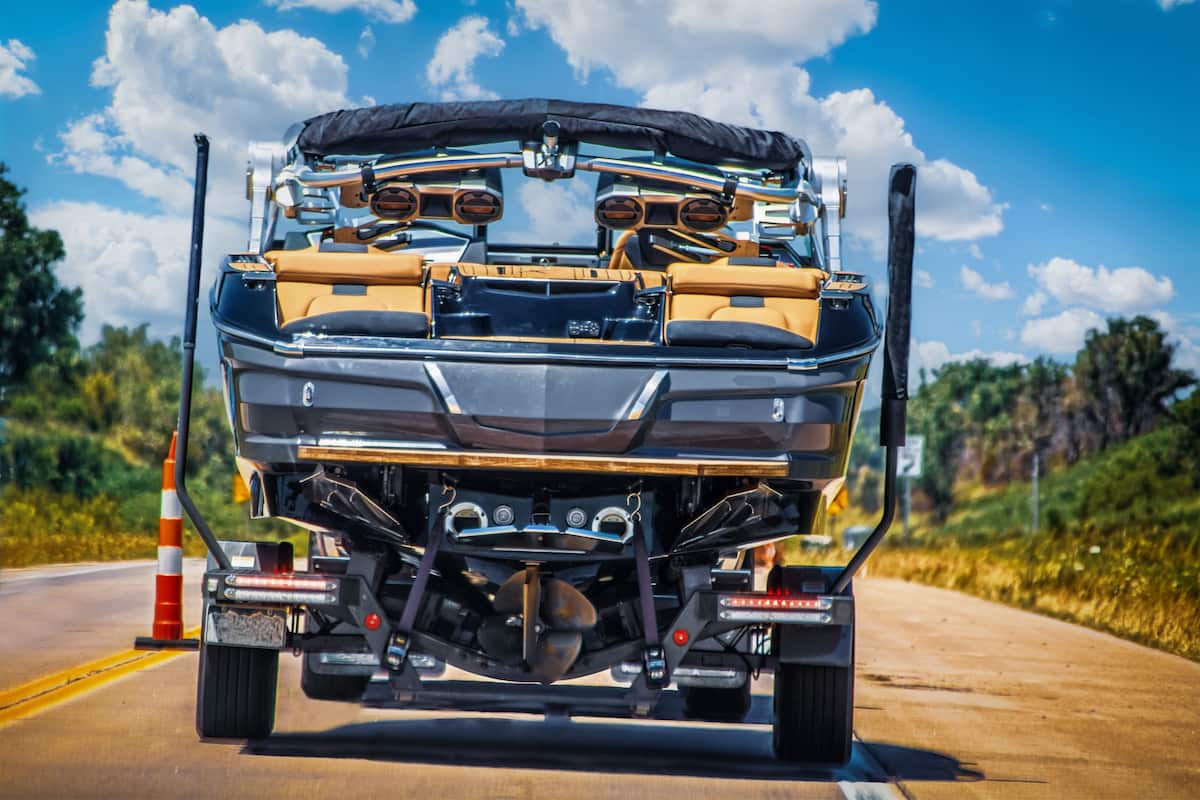
Boats and Marine Freight
Large boats and marine freight can become over dimensional because of their width, height or shape. Hull design, trailer height and delivery access all need to be considered before transport begins.
For these loads, measuring the item itself is not enough. The transport operator needs to understand the full loaded dimensions, route conditions and site access requirements before the move is planned.
You can read more about this in our guide on how boats are transported.
How to Check Whether Your Load Is Over Dimensional
The best way to check whether a load is over dimensional is to measure the full loaded vehicle, not just the item being transported. This means considering the freight, the trailer, any attachments, and how the load sits once secured.
Before arranging transport, it helps to confirm:
- The load’s width
- The load’s height
- The load’s length
- The load’s weight
- The expected loaded height from ground level
- Whether any attachments can be removed
- Whether the load creates front, rear or side projection
- The pickup and delivery locations
- Site access at both ends
- Whether cranes, forklifts or loading equipment are required
The loaded height is especially important. A piece of machinery may sit within standard height limits on the ground, but once placed on a trailer, the total travel height may exceed the limit.
The same applies to width and length. A machine, structure or component may appear straightforward on site, but once loaded, secured and combined with the trailer, it may need restricted access approval, a different trailer, pilot vehicles or a revised route.
Site access should also be checked early. A load may travel legally on the road but still face issues at pickup or delivery if there is not enough room for turning, unloading or equipment access. Our guide on how to prepare your site for heavy haulage delivery covers the practical steps that can help avoid these problems.
If there is any uncertainty, it is better to check early. Accurate measurements help avoid delays, incorrect trailer selection, permit issues and problems at pickup or delivery.
What Happens If You Move an Over-Dimensional Load Without Proper Approval?
Moving an over-dimensional load without the right approval can create serious problems. The risk is not only a fine or compliance issue. It can also affect safety, delivery timing, site access and the wider project schedule.
If a load is stopped or found to be non-compliant, the movement may be delayed until the issue is resolved. This can create extra costs for transport, storage, escorts, reloading, route changes or new permit arrangements.
Possible risks include:
- Fines or enforcement action
- Roadside delays
- Route refusal
- Damage to roads, bridges or overhead infrastructure
- Increased safety risks for road users
- Insurance complications
- Missed crane or unloading bookings
- Project delays
- Extra costs for re-routing, escorts or reloading
For project work, the biggest problem is often disruption. If a load cannot legally continue, it can affect site crews, machinery availability, delivery windows and dependent stages of work.
This is why over-dimensional transport should be planned before the load is ready to move. Confirming dimensions, route access and permit requirements early helps reduce the risk of delays and keeps the movement safer, smoother and more compliant.
How Australia Wide Haulage Helps With Over-Dimensional Transport
Over-dimensional transport needs more than a truck and trailer. It needs the right planning, the right equipment and a clear understanding of the route, load and compliance requirements.
At Australia Wide Haulage, we help by assessing the freight before the movement begins. This includes looking at the load’s width, height, length, weight, pickup location, delivery site and any access issues that may affect the job.
From there, we can help determine whether the load is over dimensional, overmass or both. This allows us to recommend the right transport method and identify whether permits, pilot vehicles, escort vehicles or route checks may be needed.
Our support may include:
- Reviewing load dimensions and weight
- Selecting suitable trailers and equipment
- Planning safe and practical transport routes
- Coordinating permit requirements where needed
- Organising pilot or escort support
- Managing pickup and delivery timing
- Planning for regional, remote and mine site access
- Helping reduce delays caused by incorrect planning
Every over-dimensional movement is different. A wide excavator, a long steel beam and a tall transportable building may all need different equipment and route planning. That is why we assess each job based on the actual loaded dimensions and the conditions of the route.
For regional or isolated delivery locations, we also support remote delivery freight where access, timing and conditions need to be carefully managed.
Our goal is to make the movement safer, smoother and more reliable from the first planning stage through to final delivery.
Measure First, Plan Early
A load becomes over dimensional when the loaded vehicle exceeds standard road transport size limits. This may happen because of width, height, length, overhang, projection or a combination of these factors.
The important point is to measure the full loaded vehicle, not just the freight item on its own. Trailer height, attachments, load position and overall vehicle combination can all affect whether the movement becomes restricted.
Permit requirements also depend on more than dimensions alone. The route, vehicle type, state or territory, road authority requirements and site access conditions all need to be considered before transport begins.
For businesses, early planning helps avoid costly delays. It allows time to choose the right trailer, check access requirements, plan the route, organise permits and arrange pilot or escort vehicles where needed.
If you are unsure whether your load is over dimensional, start by confirming its width, height, length and weight. From there, our team can help assess the route, transport method and permit requirements.
Need to move an over-dimensional load? Contact Australia Wide Haulage to discuss your freight, route and delivery requirements.