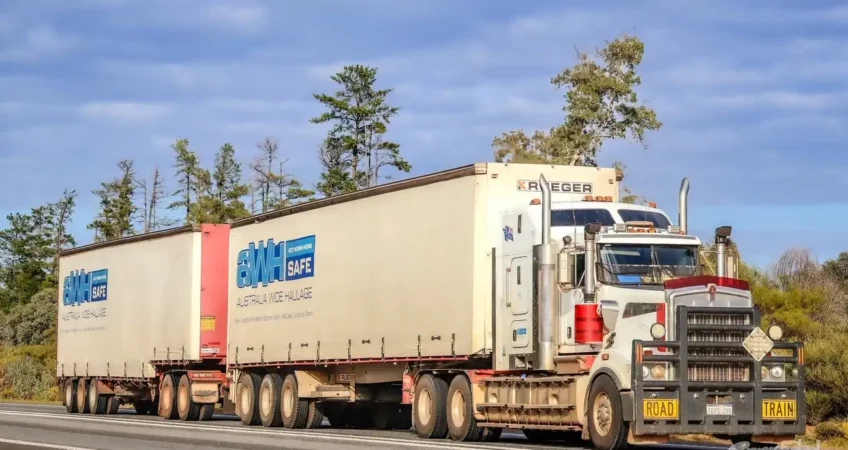
Linehaul transport is the long-distance leg of a freight journey. In road freight, it often connects two depots, distribution hubs or distribution centres. On a Perth-to-Port Hedland shipment, the truck movement between the two depots is the linehaul leg.
Source: GS1 Australia transport and logistics glossary
Quick summary
- Linehaul covers the main transport leg. On a depot-to-depot booking, it starts at the sending depot and ends at the receiving depot.
- Transit time depends on what you book. Confirm whether the estimate covers depot-to-depot travel or the full journey from pickup to final delivery.
- Site delivery needs its own details. If freight must reach a mine or project site, provide the access point, delivery window and unloading requirements when you request a quote.
How does linehaul transport work?
On a depot-based service, freight moves through three stages. The sender or carrier gets the goods to the sending depot. A linehaul truck moves them to the receiving depot. The receiver then collects the freight, or the carrier arranges delivery if the booking includes it.
Pickup or depot drop-off
The sender can drop the goods at the depot, or a carrier can collect them. If the goods are coming from a supplier, confirm when they will be packed and ready. Check whether the sending depot has a cutoff for freight to make the planned departure.
The linehaul leg
The linehaul truck moves freight between depots. A carrier can combine compatible shipments heading to the same region on one trailer. This is called consolidation. If you only need to move a few pallets, shared trailer space may be suitable. Tell us about any handling restrictions so we can assess whether the freight can travel with other loads.
Collection or final delivery
At the receiving depot, the freight may need to be unloaded and sorted before it is ready for collection or loaded onto another truck for local delivery. Check when the receiver can collect it. If delivery is included, confirm the receiving hours at the final address.
What does the transit time cover?
A depot-to-depot transit time covers the movement between the nominated depots. A door-to-door estimate should account for pickup, the main transport leg and final delivery. Ask which milestones the carrier uses to measure transit time so you can compare quotes on the same basis.
If a pallet is due into Port Hedland on Thursday, check whether Thursday means the truck is expected at the depot, the pallet is available to collect, or the freight is due on site. Those are different milestones. If a maintenance crew needs the pallet for a Friday shutdown, give the carrier the site delivery deadline before you book.
Where does linehaul end?
On a depot-to-depot booking, linehaul ends at the receiving depot. Any movement beyond that point depends on the delivery arrangements in your quote.
Suppose you’re sending a pallet of pump spares on our Perth to Port Hedland freight route. If a local contractor will collect it, confirm the depot address and collection window. Give the contractor the consignment reference so they can identify the freight on arrival.
If the pallet needs to reach a mine site, confirm who will arrange the final leg. A mine name alone may leave the driver with several possible gates or receiving areas. For remote freight delivery, give us the approved access point, site contact and any induction or unloading requirements.
When does direct transport suit?
Direct transport
Direct transport can suit freight that is difficult to transfer between vehicles or needs to arrive within a fixed delivery window. A full truck load gives your shipment dedicated trailer space. If the truck needs to go straight from pickup to site, include that requirement in the quote request.
Shared linehaul
Shared linehaul services can suit smaller shipments when the freight can be handled at a depot and the timing allows for onward delivery.
If both options could work, give us the same final address and delivery deadline. We can assess the route, handling and access requirements for each option.
What should you confirm before booking?
Confirm where your quote starts and ends, then provide the details that affect each handover.
- LoadList the number of items, packed dimensions and weight of each item. Flag any special handling requirements.
- PickupProvide the collection address, the date the freight will be ready and any loading requirements.
- DestinationSpecify depot collection or give the final delivery address, access point and receiving contact.
- TimingGive the required collection or delivery window. Flag any shutdown, crew booking or site restriction that affects it.
- UnloadingConfirm who will supply a forklift or crane if one is needed.
What is the meaning of line haul?
Linehaul is another spelling of the same term. On a depot-based road service, it describes the leg between the sending and receiving depots.
Plan your regional freight move
We’re a family-owned WA freight business with depots in Perth and the Pilbara. If your freight needs to go beyond a regional depot, give us the final delivery address and the date it needs to arrive.