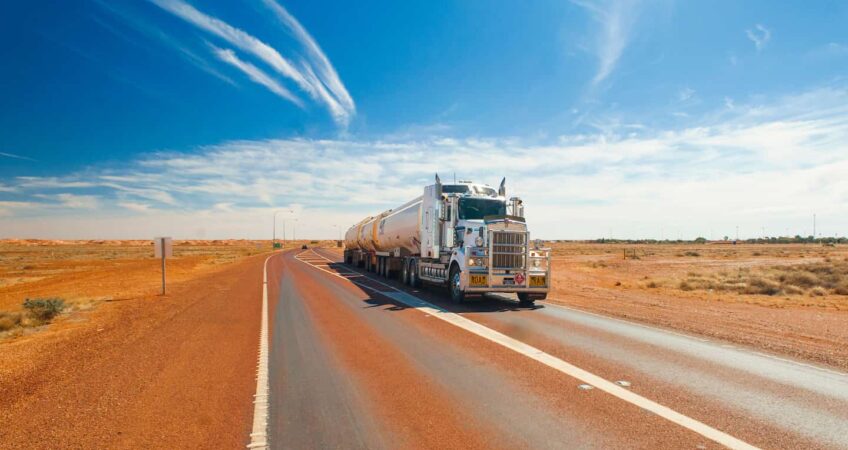
A fuel levy is a charge that a freight carrier may add to its base freight rate to account for changes in the cost of fuel. Transport companies also call it a fuel surcharge. The rate can vary by carrier, service and agreement.
Quick summary
- A fuel levy accounts for changes in diesel costs.
- Under one common formula, a 20% rise in the diesel benchmark gives a 5% levy if fuel accounts for 25% of the base freight rate.
- Before booking, confirm the total including GST and the levy that applies to your planned pickup.
What is a fuel levy?
A fuel levy lets a carrier account for changes in diesel costs while keeping the base freight rate separate. For heavy haulage, the base rate can reflect the distance, equipment and number of trips. If the carrier lists the levy separately, check how much it adds to the quoted total.
How to calculate a fuel levy
First, calculate the percentage change from the base fuel price. Then multiply that change by the fuel share. The fuel share is the portion of the base freight rate that the formula assigns to fuel.
Fuel levy rate = [(current benchmark price − base fuel price) ÷ base fuel price] × fuel share
Use the same benchmark, units and GST basis for both fuel prices. The National Road Transport Association explains the role of the fuel share in its fuel levy guide.
Worked fuel levy example
Suppose the diesel benchmark rises from $2.00 to $2.40 per litre. In this example, the carrier uses a fuel share of 25%.
- Divide the $0.40 increase by the $2.00 base fuel price. The benchmark has risen by 20%.
- Multiply 20% by the 25% fuel share. The fuel levy is 5%.
- Apply 5% to a $1,000 base freight charge. The levy adds $50, bringing the total to $1,050 before GST.
If you use a fuel levy calculator, enter the benchmark prices and fuel share specified in the carrier’s formula. The figures above are illustrative.
Use the benchmark and fuel share in your carrier’s formula. Your written quote shows the levy that applies.
Why does the fuel levy change?
A carrier can adjust its levy when it reviews its diesel benchmark. Some carriers use terminal gate prices published by the Australian Institute of Petroleum. These are wholesale prices at fuel distribution terminals.
A carrier may average diesel prices over a set period. It may also review the levy weekly or monthly. That is why a change in pump prices may take time to show up in a freight quote.
What should you check on a freight quote?
Compare the total payable for the same pickup and delivery service. Before booking, confirm:
- InclusionsCheck whether the quoted total includes the fuel levy and GST.
- CalculationIf the carrier lists the levy separately, confirm which charge it applies to.
- TimingCheck when the quote expires and which levy applies if your pickup date changes.
- DeliveryConfirm whether the quote covers depot collection or delivery to the final site, and who arranges unloading.
What is the current fuel levy in Australia?
Carriers can use different rates for different services and agreements. For a specific shipment, check the applicable rate and dates on your written quote or freight agreement.
Get a freight quote
For a WA freight quote, send us the load weight and dimensions, planned pickup date and final delivery address. Include any site access or unloading requirements so we can quote for the full move.