The Port Hedland logistics hub at Lumsden Point gives Pilbara freight a more direct port pathway into the north west. It will support Port Hedland freight, direct shipping, critical minerals freight and renewable energy infrastructure transport — but large loads still need route planning, permits, escorts and site access checks.
For any Pilbara business moving machinery, mine site freight or project cargo, the Lumsden Point logistics hub is a genuine long-term transport improvement. What it isn't is a replacement for proper freight planning.
- Lumsden Point is a new logistics hub at the Port of Port Hedland, built to support new cargo pathways across the Pilbara.
- Pilbara Ports Authority has linked the project to lithium and copper concentrates, mineral resources and renewable energy infrastructure.
- Pilbara freight transport may become more direct as port facilities and shipping services expand.
- Heavy haulage movements will still need the right equipment, permits and route planning.
- Over-dimensional loads, remote freight and road train movements will still depend on access, weather, laydown space and site readiness.
What is the Lumsden Point logistics hub?
Lumsden Point is a new multi-user port facility at the Port of Port Hedland, developed to improve cargo capacity and support trade growth across the Pilbara region. The project supports broader Port Hedland logistics by giving freight operators, mining companies and project teams more options for imports, exports and cargo staging.
This matters because Port Hedland has long supported mining and bulk export activity. Lumsden Point adds capacity for different freight types — project cargo, modular freight, wind components, mineral resources, general cargo and electric vehicle supply chain inputs.
For Pilbara logistics, the key point is simple: cargo arrival is only the first stage. Freight still needs to move by road to Wedgefield, mine sites, construction projects, Karratha, inland Pilbara sites and remote WA destinations.
How will Lumsden Point change Pilbara freight?
Lumsden Point will change Pilbara freight by giving some cargo a closer entry point into the region. This may reduce reliance on long-haul freight from southern ports, depending on the cargo, project location and shipping services available.
The Western Australian Government and state government have supported common-user port upgrades in the Pilbara, designed to support future trade, mining, renewable energy and industrial freight demand. For freight planning, the main question isn't just where cargo arrives — it's how that cargo moves from the port to the final site.
More direct Pilbara freight options into the region
Larger modules moving through Port Hedland
Into industrial areas and laydown yards
Wind, solar, battery and transformer transport
Lithium and copper concentrate movement
Long-term north west freight strategy
Better port access can reduce pressure in the supply chain. It doesn't remove the need for transport solutions that account for load size, route conditions, unloading access and timing.
What freight will be most affected?
The freight most affected by Lumsden Point will likely include project cargo, heavy machinery, renewable energy infrastructure, battery metals, mine site equipment, general cargo and remote supply freight.
Project cargo may include large modules, tanks, construction components and industrial equipment. Heavy machinery may include civil plant, mining equipment and specialist parts that need low loaders or other heavy haulage equipment. Renewable energy freight may include wind, solar, battery and transformer components — loads that can be long, heavy or difficult to handle. Critical minerals freight may include lithium and copper concentrates moving between mine, port and processing supply chains.
Remote freight WA may also benefit, since some cargo can now enter the region closer to inland mine sites, stations and project locations.
How will this affect Pilbara mining logistics?
Lumsden Point should support Pilbara mining logistics by improving port access for equipment, mineral resources, critical minerals freight and mine supply chains — giving mining companies another pathway for Port Hedland mining freight and mine site delivery.
Mining freight depends heavily on timing. Parts, machinery and project cargo often need to match shutdown dates, crane bookings, crew rosters and site access windows. If a loader, drill rig component or module arrives late, the delay can affect contractors, cranes, crews and production planning.
"Cargo arrival is only the first stage."
- Cargo release times
- Laydown space
- Road train access
- Mine site entry rules
- Delivery windows
- Escort requirements
- Unloading equipment
- Route conditions
As a WA freight operator with mine site and remote-area experience, we plan these details before the truck arrives — reducing avoidable delays once the freight itself is ready to move.
Why heavy haulage planning still matters
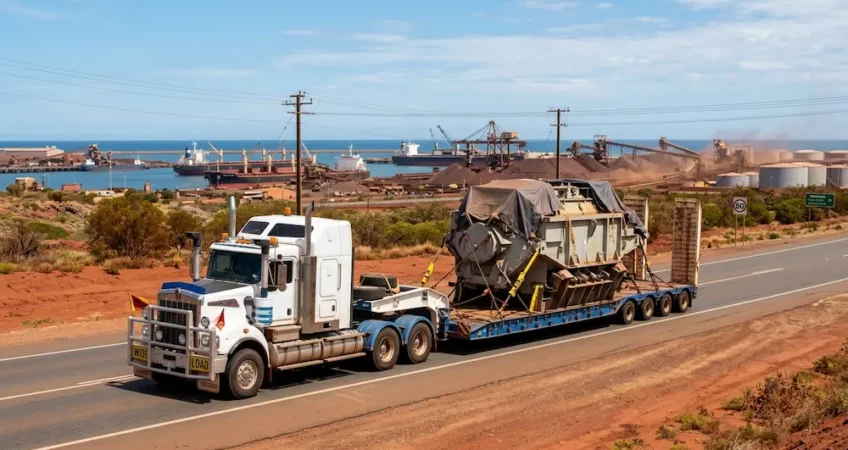
Better port facilities don't change the size, weight or risk profile of large freight. Port Hedland heavy haulage still needs the right trailer, an approved route, a permit, an escort plan and careful delivery timing.
An oversize load may be too wide, high or long for normal road movement. Overmass freight exceeds standard weight limits. These dimensional loads can include wind turbine blades, excavator parts, crushers, screens, tanks, drill rigs, power equipment and industrial modules — and the route may include bridges, tight turns, traffic islands, roadworks, overhead structures or mine site access points.
This is where over-dimensional transport planning matters. For heavy plant and mining equipment, our heavy machinery transport service is also relevant — many Lumsden Point freight movements will need low loaders, drop decks, extendable trailers, road trains or other specialist equipment.
What this means for remote freight WA
Lumsden Point may improve remote freight WA options by giving some cargo a closer entry point into the Pilbara — helping freight move from Port Hedland into remote mine sites, stations, construction areas and industrial projects.
Remote freight isn't only about distance. It also involves access, road conditions, fuel, rest planning, site rules and communication. A remote delivery may involve unsealed roads, limited unloading equipment, restricted access gates, changing weather, mine site instructions and permit conditions.
For remote deliveries beyond Port Hedland, our remote delivery freight service supports businesses planning across regional and remote WA. Longer regional freight, such as Port Hedland to Kununurra and Port Hedland to Karratha routes, may also become more relevant as cargo moves between port areas, industrial yards, workshops and project sites.
What to prepare before moving freight through Lumsden Point
Businesses should have clear cargo, route, access and unloading details ready before moving freight through Lumsden Point. Before requesting a quote, confirm:
- Pickup point and cargo release details
- Load length, width, height and weight
- Cargo type and handling requirements
- Standard, oversize or overmass status
- Trailer type needed
- Destination and delivery window
- Permit and escort needs
- Laydown or staging needs
- Crane, forklift or telehandler access
- Site induction or mine access rules
The earlier these details are ready, the easier it is to plan a safe and efficient freight movement.
How AWH supports Pilbara freight through Port Hedland
We help businesses plan and move freight from port, depot or laydown area to final destination — heavy machinery, over-dimensional loads, mine site freight, full truck loads and remote deliveries. We're a family-owned WA freight and logistics company with experience across mine sites and remote areas throughout the state, and a fleet of modern line haul prime movers rated from 90 to 167 tonnes.
Practical summary
Lumsden Point is a major change for Port Hedland freight — a logistics hub focused on direct shipping, critical minerals, renewable energy infrastructure and project cargo. For Pilbara freight, that means more options through the Port of Port Hedland, and more demand for practical transport planning across heavy haulage, remote freight, mine site delivery and over-dimensional transport.